


Twenty years from now, the children in our classrooms will be making decisions we cannot make for them. They will be working, raising families, handling money, learning new skills and facing problems we cannot yet predict.
That is the future we have in mind when we plan a lesson.
Reading, writing and mathematics are essential. But our ambition reaches further. We want children who recognise when something does not make sense. Who ask useful questions, try an unfamiliar approach and explain their reasoning. Who can take responsibility without waiting for instructions at every step.
Those abilities need practice. The way children experience school helps shape how they approach the world.
At EGI in Kot’olin, we have therefore made deliberate choices about how we teach, how we lead and how we respond when learning becomes difficult.
Learn from the best, then make it work here
Building a school gives us an unusual opportunity: we can question habits before they become established.
We do not have to invent every answer. Excellent educators and schools around the world have already developed approaches worth learning from. Educational research helps us understand their strengths, while experienced practitioners help us recognise what good implementation actually requires.
Our task is to bring that knowledge into a remote community in eastern Indonesia.
That means combining ideas intelligently. Playful learning, practical application, meaningful challenges, participation and clear guidance all have a place. We choose methods according to what they help children learn, then adapt them to our teachers, resources and surroundings.
We want EGI to become an example of what ambitious education can look like in this setting. That requires high expectations, including the willingness to examine our own work and change it.
Play belongs in primary school, too
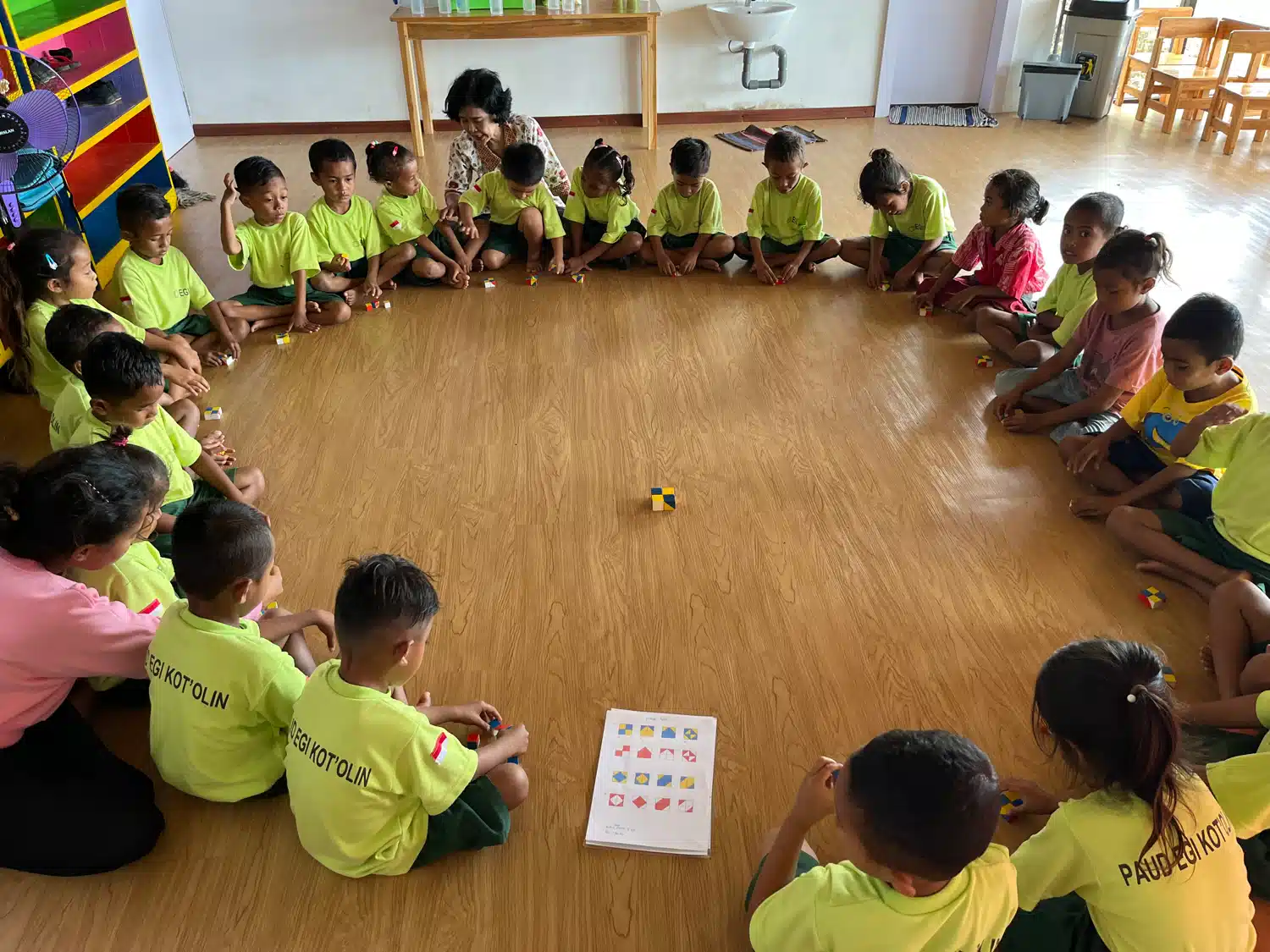
Watch children playing a strategy game. They remember what happened, anticipate another player’s move, reconsider a plan and cope when it fails. Their minds are working hard, even though nobody has handed them a worksheet.
This is one reason we take play seriously.
A well-chosen game creates a situation in which thinking has an immediate purpose. Children need to count accurately because the next move depends on it. They need to communicate because their team needs to understand. They try again because they want to solve the challenge.
There is research behind this. In a study of seven- to nine-year-olds, an eight-week programme using reasoning games improved performance on a standardised test of non-verbal reasoning. A separate group practising speed-based games improved processing speed instead. The pattern matters: different games exercised different cognitive abilities. The study demonstrates that carefully chosen games can develop aspects of thinking itself, beyond practising school content. It does not establish a universal increase in intelligence from playing any game. Mackey and colleagues, 2011
A broader review of guided play found advantages over direct instruction in specific areas, including early mathematics, shape knowledge and switching between tasks. It did not find an advantage across every outcome. For us, that points towards purposeful selection: understand the learning goal, then choose the activity that serves it. Skene and colleagues, 2022
The teacher remains essential. They notice who has understood, ask a question that moves the thinking forward and help children recognise what they have learned.
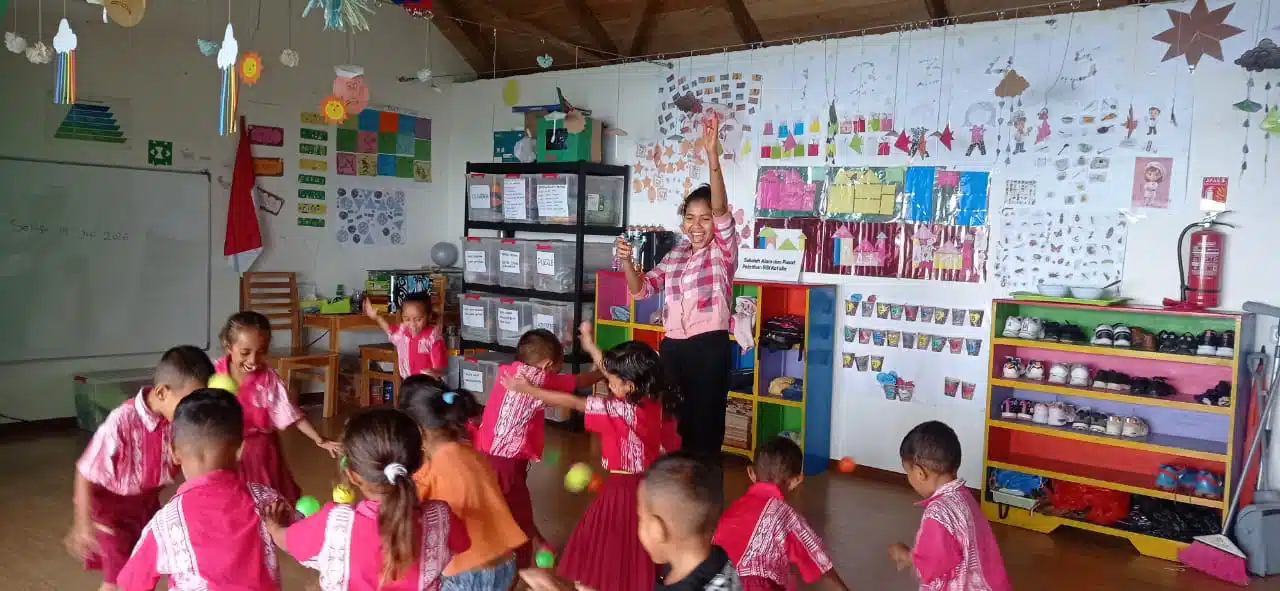
We want this approach to continue beyond kindergarten. Entering primary school should open up more demanding forms of play, richer challenges and deeper thinking. Joy and intellectual effort belong together.
When knowledge becomes worth having
For years, I thought I was bad at languages.
When I left school, even simple conversation was difficult. Later, travelling gave language an immediate purpose. I wanted to understand people, build relationships and find my way around. Learning Indonesian became part of living and working here. I learned largely through use, without formal classes, and eventually became confident enough to negotiate and handle complex conversations.
I still have plenty to learn. But the contrast with my school experience was striking: once language mattered to me, I actively pursued it.
That experience informs an important question at EGI: can children see a reason for what we are asking them to learn?
Personal relevance influences the effort people invest in learning. In a classroom experiment, secondary students were asked to connect science topics with their own lives. Among students with low expectations of success, the intervention increased both interest and course grades. Hulleman and Harackiewicz, 2009
For younger children, relevance can be immediate and concrete. Measuring tells us whether something will fit. Reading gives us information we need. Comparing quantities helps us share fairly. A new word lets us express something we could not say before.
A teacher who makes those connections visible gives children a reason to engage. Knowledge becomes something they can use.
From remembering to creating
Bloom’s revised taxonomy gives us a useful language for our ambition: remember, understand, apply, analyse, evaluate and create.
These are different kinds of intellectual work. Remembering a fact matters. Explaining it, using it and judging when it applies require more.
Consider measurement. A child can remember that one metre contains one hundred centimetres. They can explain what that means and use a ruler correctly. But planning a shelf introduces further questions: how much space is available? Which dimensions matter? Will the proposed design fit? What should change?
The facts remain essential. The child is now doing something with them.
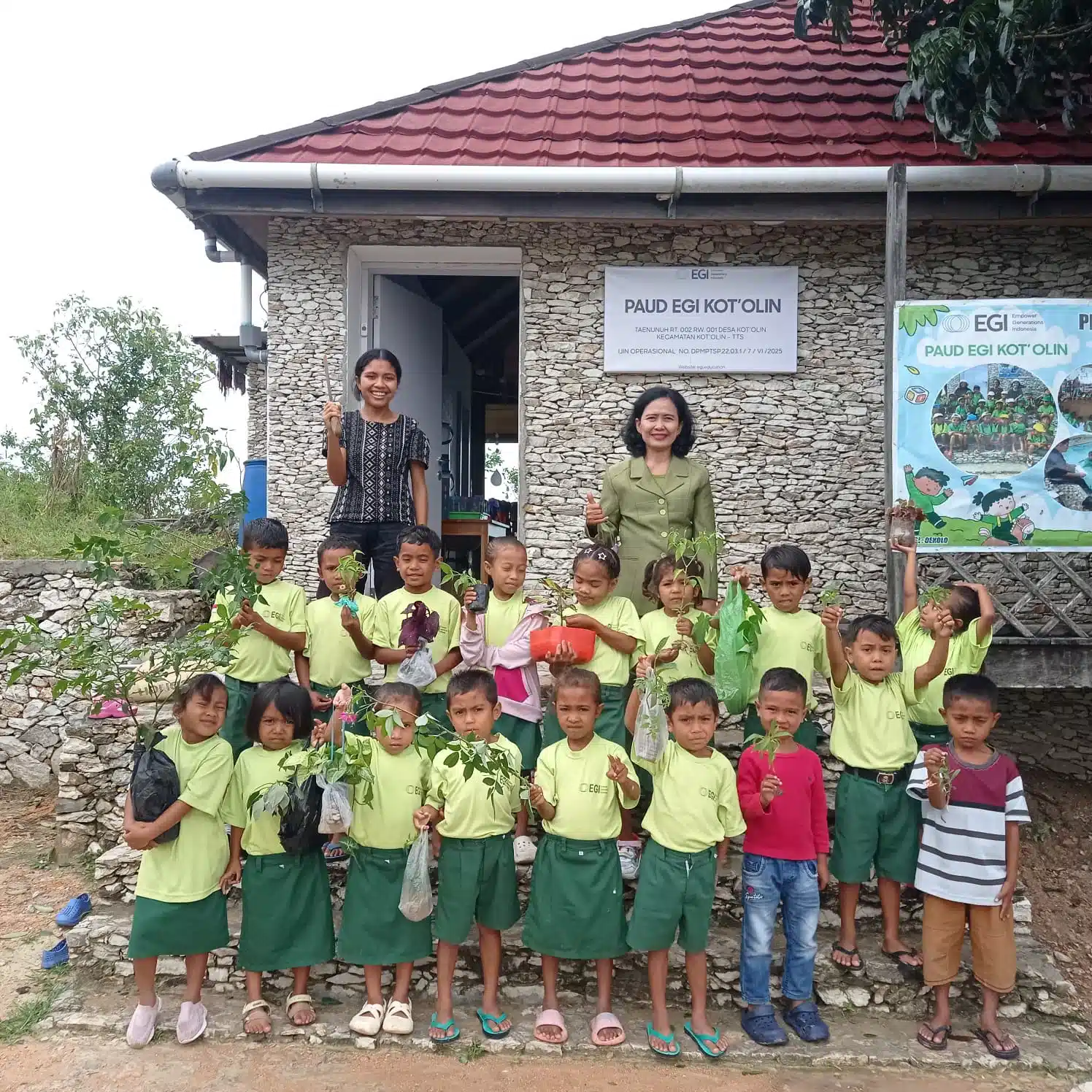
That is what we want practical learning to achieve. An activity should make children use their knowledge, examine a result or improve an idea. Bloom’s taxonomy helps us ask whether we are giving them those opportunities.
It is a planning framework, rather than a recipe that every lesson must follow in order. Across their education, children need repeated opportunities to work at all these levels.
Let the problem give the tools a purpose
Imagine introducing a selection of tools to children. We can explain each one, describe its parts and ask them to remember its name.
Now imagine placing a simple object in front of them and asking how it could be taken apart. Suddenly, the screws matter. The shape of the screwdriver matters. The tool answers a question the children already have.
This is the attraction of beginning with a problem: it creates a reason to learn the next thing.
It also exposes children’s thinking. What have they noticed? What assumptions are they making? Which approach do they try, and what happens when it does not work?
Research on “productive failure” examines a related sequence: learners attempt a carefully designed problem, then receive instruction that builds on their attempts. A meta-analysis found overall benefits for conceptual understanding and applying learning to new situations. However, results for younger primary pupils favoured instruction first, an important consideration for our age group. Sinha and Kapur, 2021
Our principle is therefore to give children meaningful problems and the support they need to tackle them. Sometimes a demonstration comes first. Sometimes a question or an initial attempt makes the explanation more valuable.
The teacher’s judgement connects the challenge to the learning.
Participatory leadership: responsibility needs practice
If we want children to become responsible adults, they need opportunities to exercise responsibility while they are young.
The same principle applies to our team. Teachers develop professional judgement by observing, proposing, deciding and reviewing their decisions. A school where all thinking rests with one leader places a ceiling on everyone else’s development.
We therefore choose a participatory style of leadership.
Teachers should contribute their observations and ideas. Children should have a voice in appropriate classroom decisions, explain their thinking and learn to consider other perspectives. Leadership provides direction, clear expectations and support.
Participation also brings obligations. An idea needs reasons behind it. A decision needs someone to carry it through. Having a voice includes listening to others and accepting responsibility for the outcome.
Research on autonomy-supportive teaching provides a strong foundation for the classroom side of this approach. A review covering 51 interventions, including 38 randomised controlled trials, found that teachers can learn to support student autonomy, with benefits for motivation, engagement and classroom climate. This involves meaningful choices, explanations and attention to students’ perspectives alongside guidance. Reeve and Cheon, 2021
At EGI, we want children and teachers to experience that their thinking matters, and to become increasingly capable of using it well.
No child should have to protect themselves from learning
We have seen children hesitate because they are afraid of being wrong. We have also seen how quickly laughter from classmates can make a child withdraw.
This deserves serious attention. Answering a question exposes your thinking. If that feels socially dangerous, keeping quiet becomes a sensible way to protect yourself.
A classroom can lose a great deal of learning that way.
Our expectation is clear: children must be able to attempt an answer without being ridiculed. Teachers have a responsibility to establish that culture, including through the way they respond to mistakes themselves.
The next step is equally important. We examine the answer. Where did the reasoning change direction? What was misunderstood? What feedback will help the child try again?
Research on learning from errors shows the value of this combination: an attempt followed by corrective feedback. The improvement comes through working with the error. Metcalfe, 2017
We want children to discover that being wrong is something they can do something about. They can ask, reconsider, practise and improve. Teachers should model that same confidence by acknowledging their own mistakes and correcting them calmly.
The future is already in the classroom
These choices reinforce one another.
Games invite children to participate. Meaning gives effort a purpose. Practical problems require them to use knowledge. Participation gives them experience of responsibility. A constructive response to mistakes makes it possible to keep trying when the answer is uncertain.
This is the learning culture we are working to build.
We care about what children can read, write and calculate today. We also care about what happens when they face a problem years from now, with no teacher nearby and no familiar exercise to copy.
Will they know how to begin? Will they ask for the information they need? Will they test an idea, recognise an error and try again?
Our ambition is to help them develop those habits now. In the long life ahead of each child, that is where the value of school continues to grow.
Research behind our approach
- Mackey et al. (2011): Reasoning and speed training through games
- Skene et al. (2022): Guided play and children’s learning
- Hulleman & Harackiewicz (2009): Relevance, interest and performance
- Sinha & Kapur (2021): Problem-solving followed by instruction
- Reeve & Cheon (2021): Autonomy-supportive teaching
- Metcalfe (2017): Learning from errors