


Before the first school buildings could rise in Oekolo, we had to answer some less visible questions. What was beneath the ground? How would construction materials reach the site? Where would the water go during heavy rain?
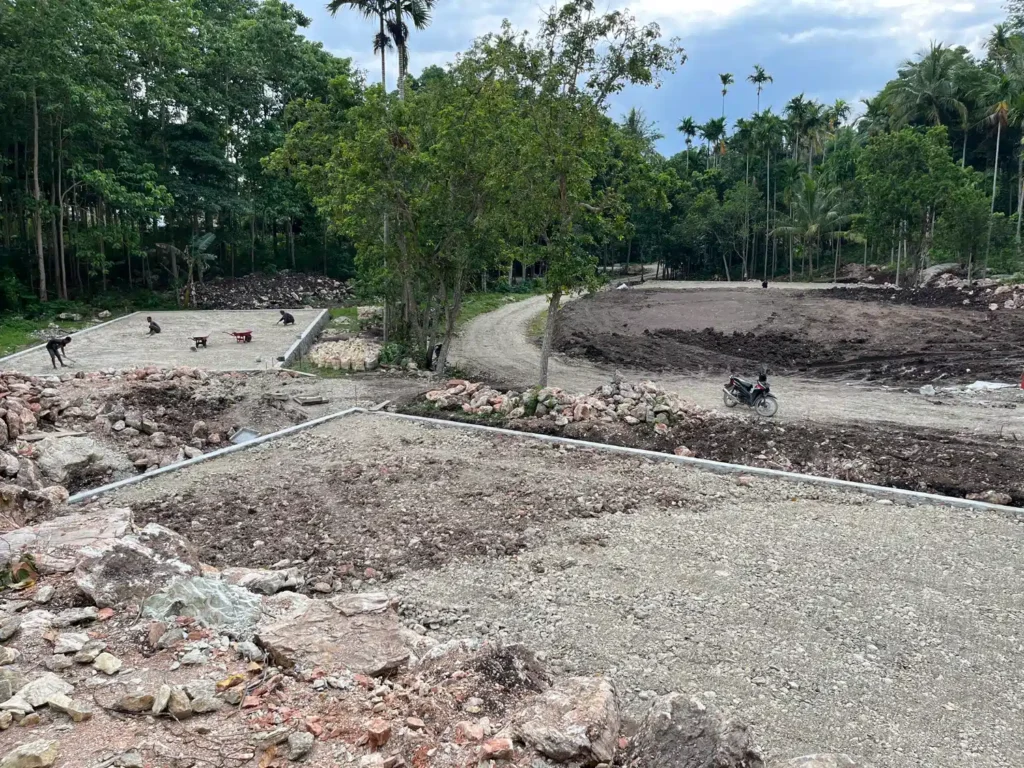
These questions became a substantial construction project in their own right. Over roughly three weeks, a seven-tonne excavator worked through the Christmas period. Truckloads of earth left the site, mineral fill arrived, and a new access road took shape. Along the way, the soil surprised us, rain exposed weaknesses in our initial preparations, and coordinating the work demanded almost as much attention as the excavation itself.
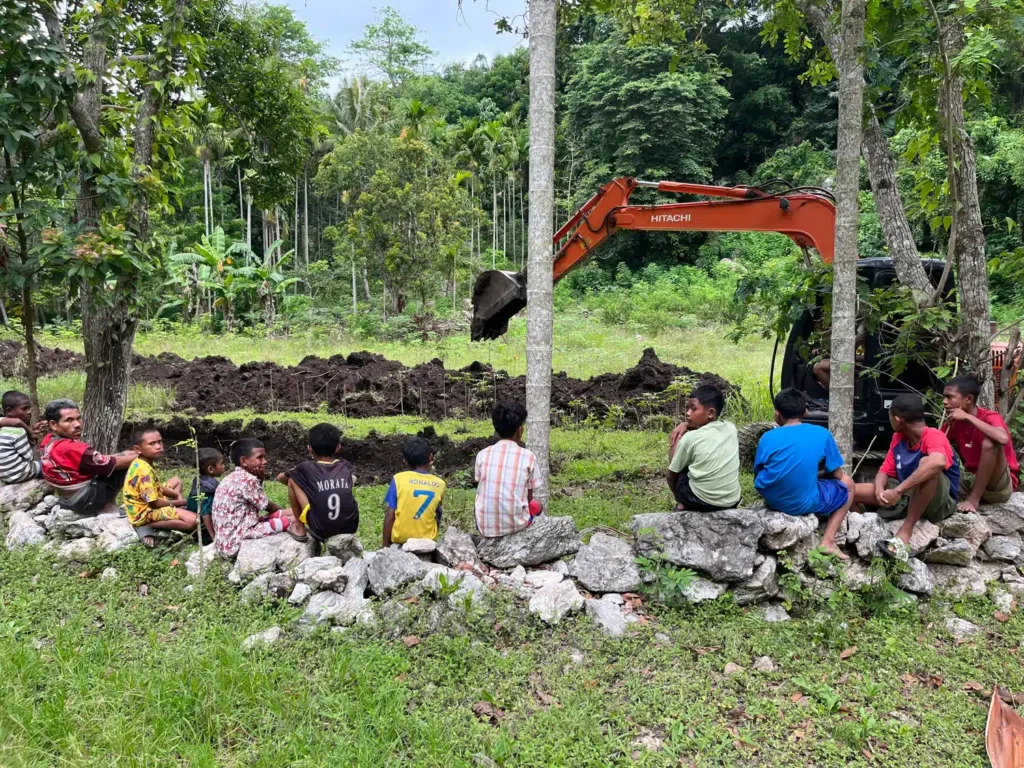
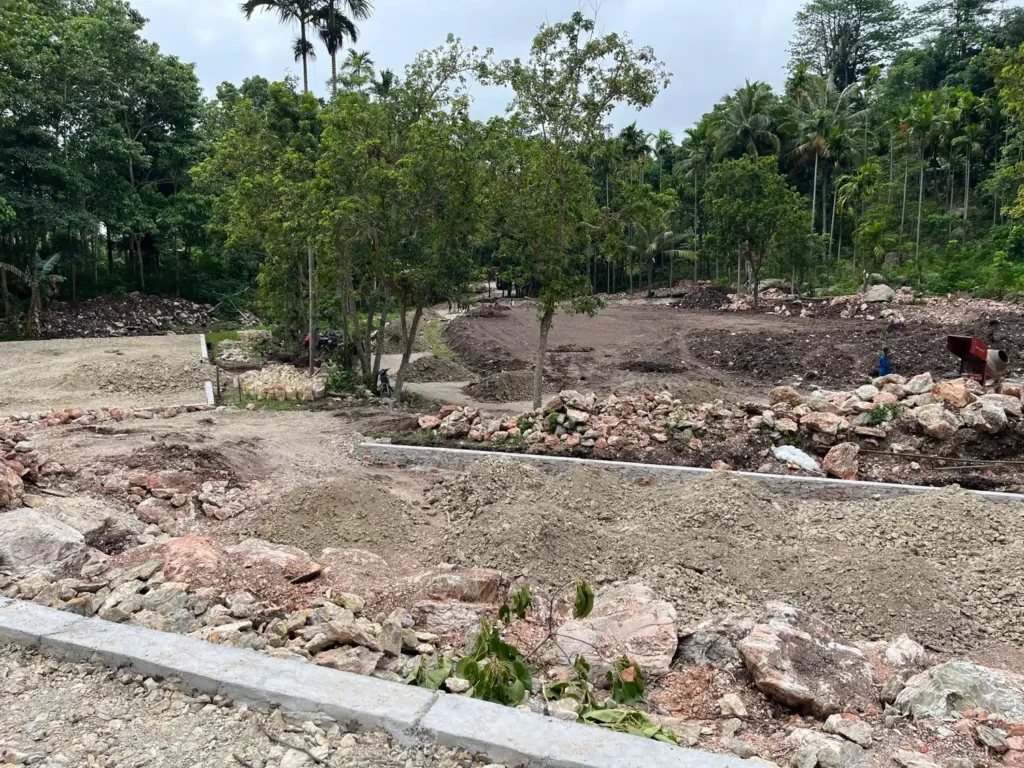
The result is the groundwork for our school’s expansion: access, prepared building areas and a drainage system designed around the terrain.
A Surprising Amount of Soil
We had expected the fertile surface soil to give way relatively quickly to stonier ground. In some places, it did become progressively more stony as we dug. Elsewhere, the dark soil continued: another layer, then another, in places extending more than two metres below the surface.
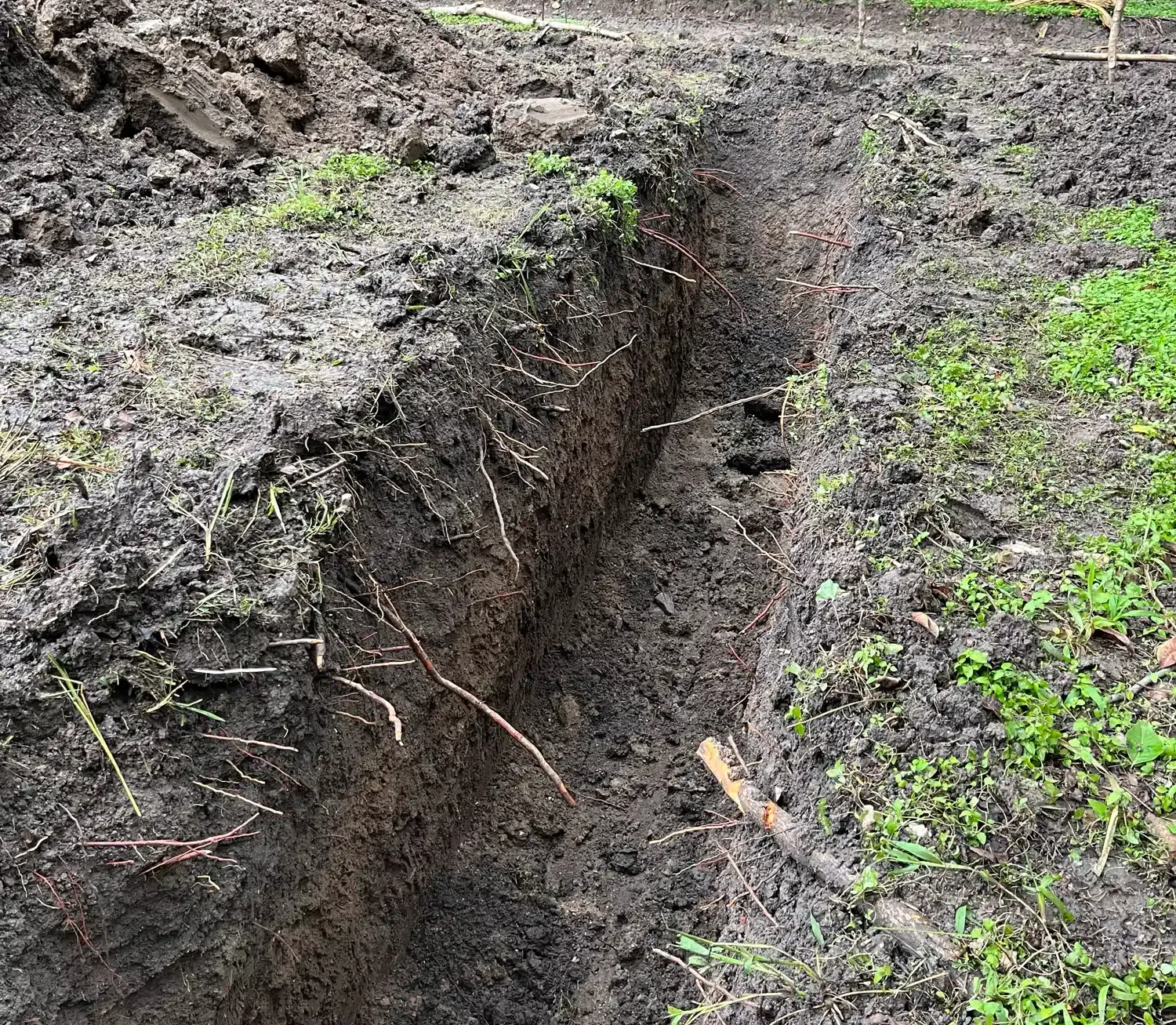
This was particularly striking around the planned sports area, where soil appeared to have accumulated after being washed down from higher ground.
For growing plants, this material could be valuable. For construction, its depth created a problem that needed a different response from the one we had initially envisaged.
We compared several approaches, including removing all the material, using piles, and excavating selectively. The solution we chose involved deeper excavation around the outer perimeter for a continuous foundation wall, with shallower excavation inside.
Depending on the ground level, approximately 50 centimetres to 1.2 metres of mineral fill was then placed within the perimeter. This locally available material contains a mixture of fine and coarse particles, including larger stones. Obtaining and placing it required a considerable number of deliveries.
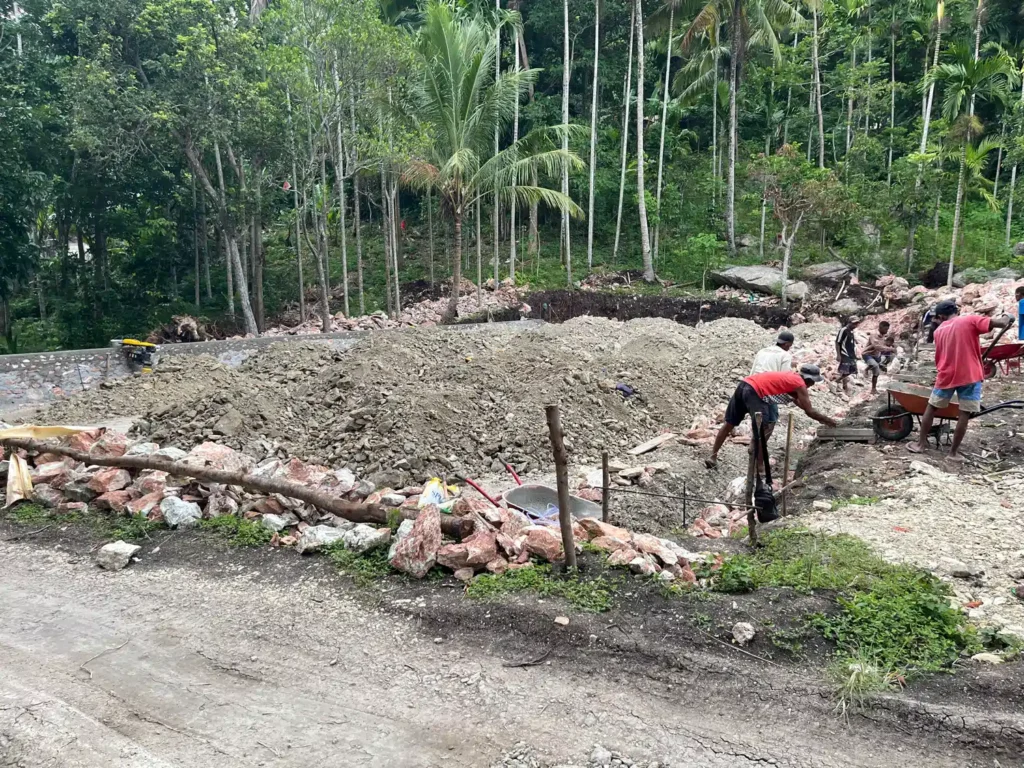
The unexpected depth of the soil had changed both the amount of work and the sequence in which it could be done.
Finding a Place for the Excavated Earth
Excavation also creates a second problem: everything removed needs somewhere to go.
We offered the fertile soil locally, but there was surprisingly little interest, even where nearby gardens were stony. We did not establish why, so the reason remains an open question.
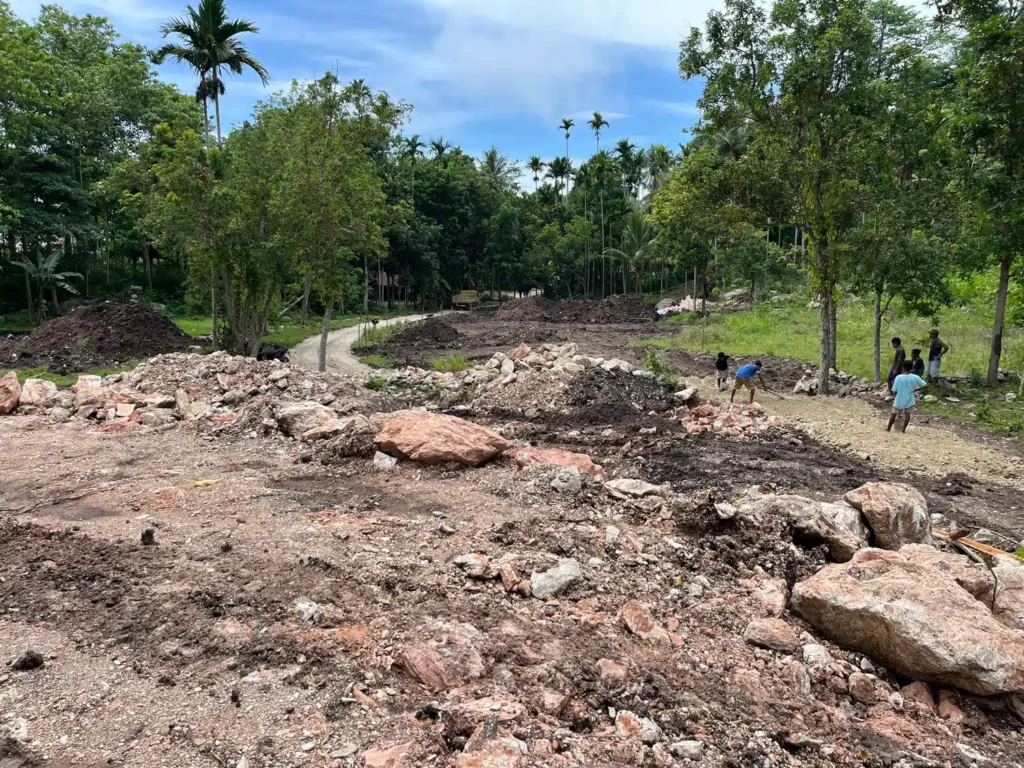
Much of the soil was redistributed on our own land, making an already relatively level area flatter. In places, the resulting deposits were more than three metres deep.
Other excavated material was taken away. We estimate that between 50 and 100 truckloads left the site. Without a designated nearby disposal location, destinations had to be arranged individually. Some neighbours welcomed material that allowed them to extend or level areas of their land.
To keep costs down, we reused material already available on site wherever suitable. We also arranged truck transport as needed rather than keeping a truck continuously on standby.
This made excavation a continuous exercise in coordination. Digging could only proceed efficiently when transport and a suitable destination were available.
A Road Designed Around Manual Work
The new access road is approximately 130 metres long. Its route serves a specific purpose: it reaches a delivery and storage area at least as high as the highest building.
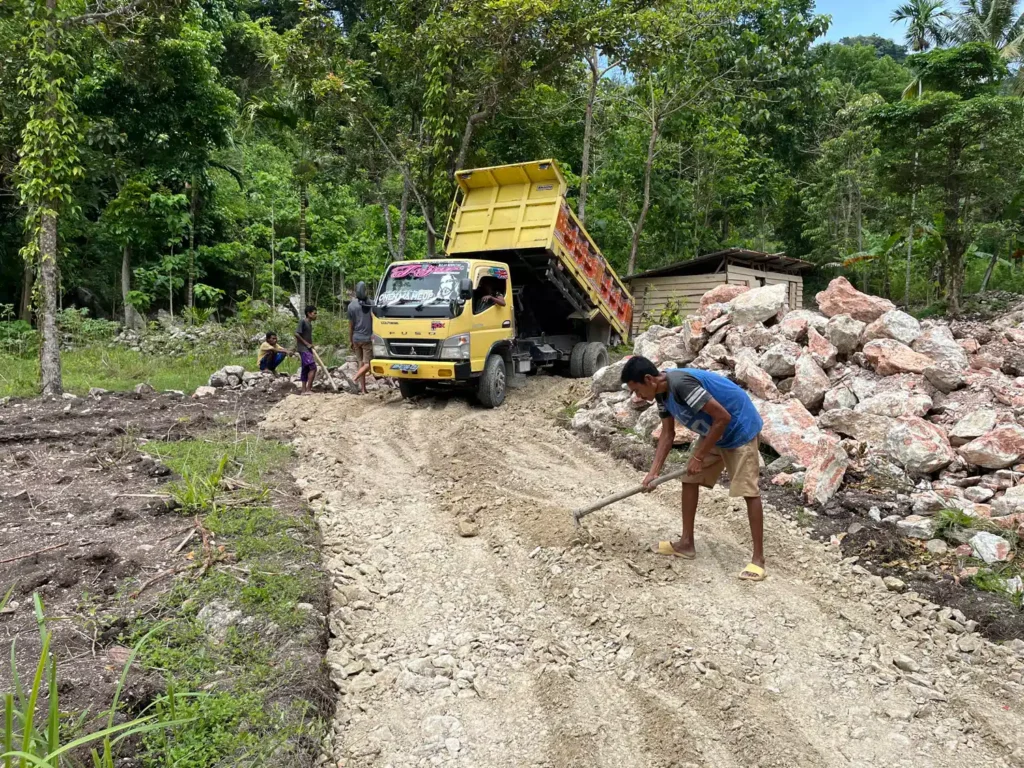
That elevation matters throughout the construction process. Sand, stone, cement and other materials can be unloaded above the work areas, allowing much of the subsequent manual transport to move downhill.
On a site where so much handling is done by hand, the position of a delivery point has consequences every day. A slightly more demanding road at the beginning can reduce repeated uphill carrying throughout the build.
To construct the road, we removed the surface soil and brought in mineral material from a source roughly 600 metres away. Having suitable material so close was a considerable advantage, although the short distance did not make the operation simple.
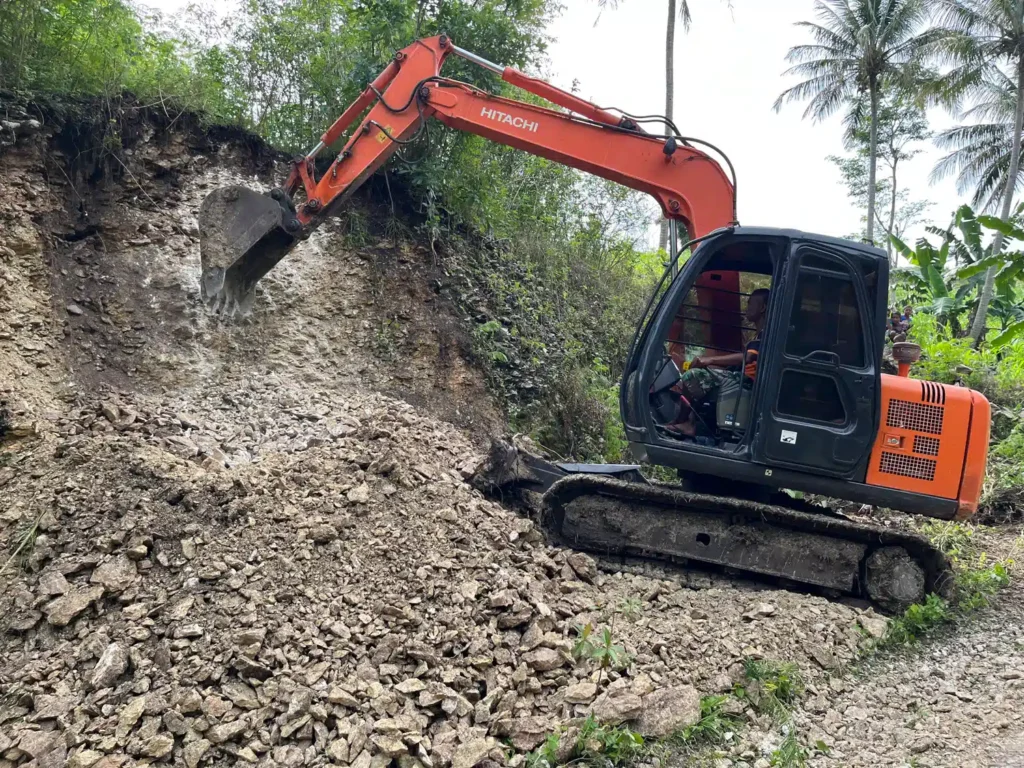
The excavator was needed at the source to load the trucks. When a truck unloaded at the school site, the machine was therefore elsewhere. Much of the material had to be spread by hand.
Keeping the Excavator and Trucks Working Together
Hiring an excavator gave us the capacity to undertake work that would otherwise have been extremely difficult. It also made coordination more urgent.
The machine, trucks and people on site needed to be available in the right sequence. Agreed arrival times did not always translate into trucks appearing when expected, and interruptions quickly affected the rest of the operation.
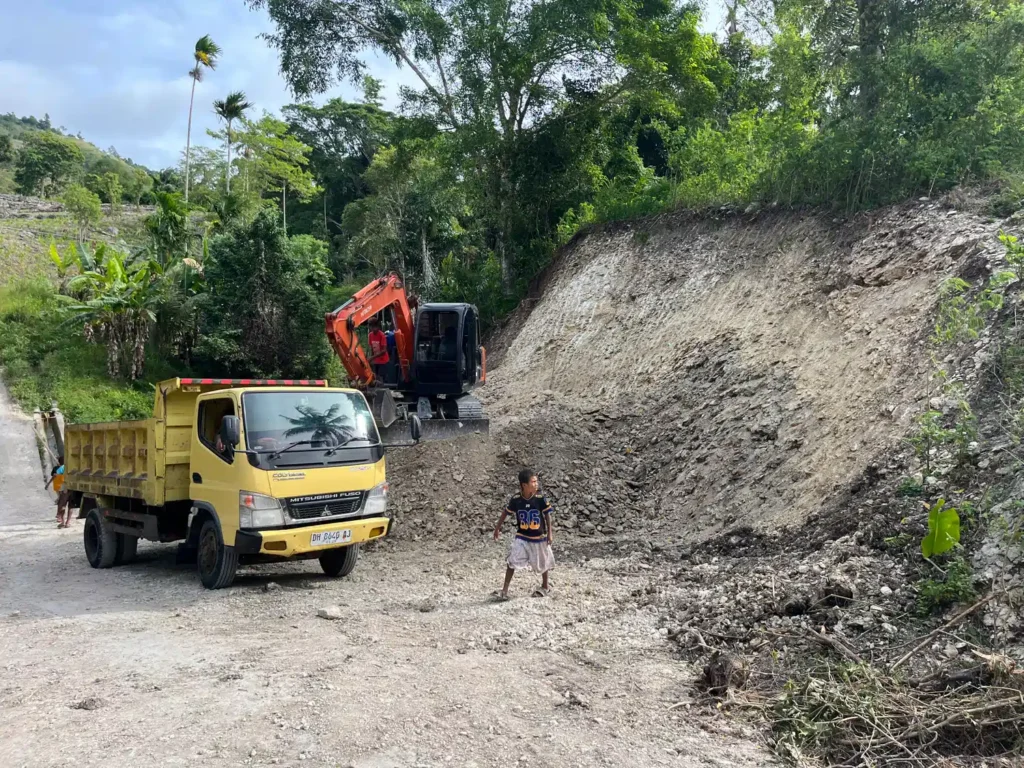
At times, this pushed us close to our limits. With a rented machine waiting and several tasks depending on it, a missed delivery or collection had an immediate cost. Everyone involved made efforts to keep the work moving, and we eventually completed the excavation campaign, but the coordination was demanding.
Fuel was another logistical task. Far from a filling station, keeping a seven-tonne excavator supplied with diesel required preparation of its own.
We are especially grateful to Emanuel, who joined us as a volunteer and supported the project both as an excavator operator and with construction work. His contribution was particularly valuable during this intensive period, including the work over Christmas.
Even with the excavator, some tasks remained stubbornly manual. Larger stones still had to be broken with hammers. And when rain soaked the soil, it stuck inside the bucket, making each excavation cycle less effective. Moving earth is a very different operation when much of it refuses to leave the bucket.
Rain Revealed What the Road Still Needed
The first rainfall quickly showed us that a mineral road surface alone was not enough.
Where water wanted to cross the road, the ground became waterlogged. Even relatively little rain could create soft, muddy sections. The surface material could not solve a problem caused by water having no adequate route through.
We therefore built two substantial reinforced-concrete drainage crossings to allow water to pass beneath the access route. They are small structures compared with the buildings, but they have an important role in keeping the road usable.
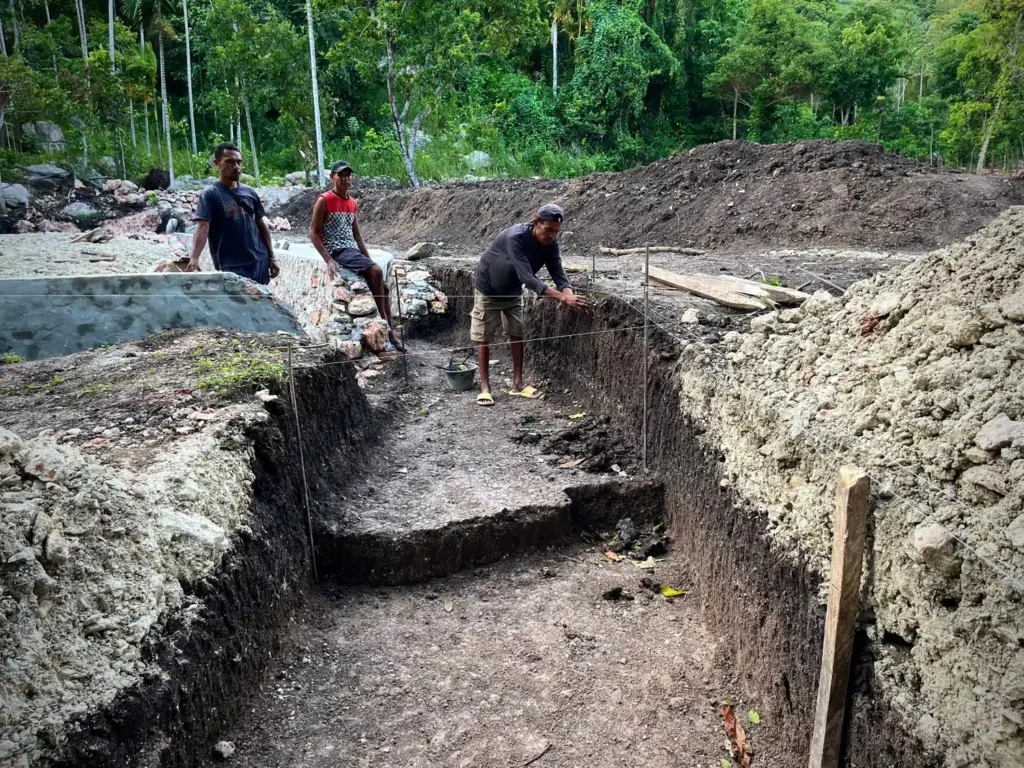
Beyond these crossings, we developed a wider drainage arrangement, with channels extending around much of the property. During the rainy season, large volumes of water can arrive in a short time. The site needs routes that carry this water through and away from the areas we are preparing for use.
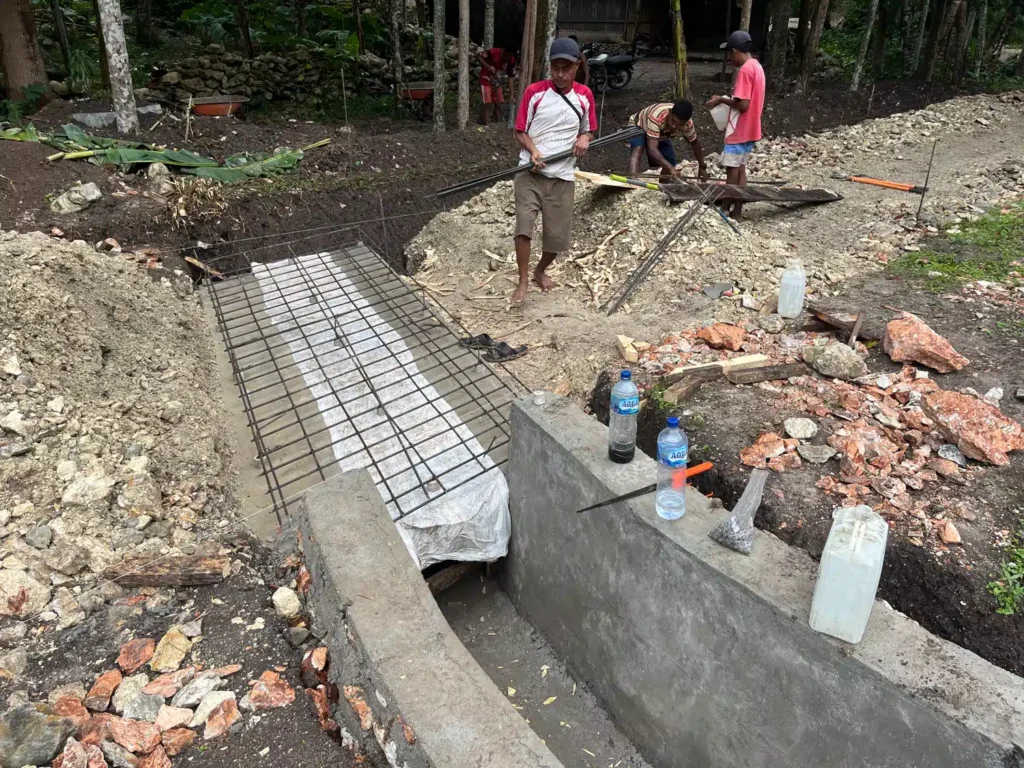
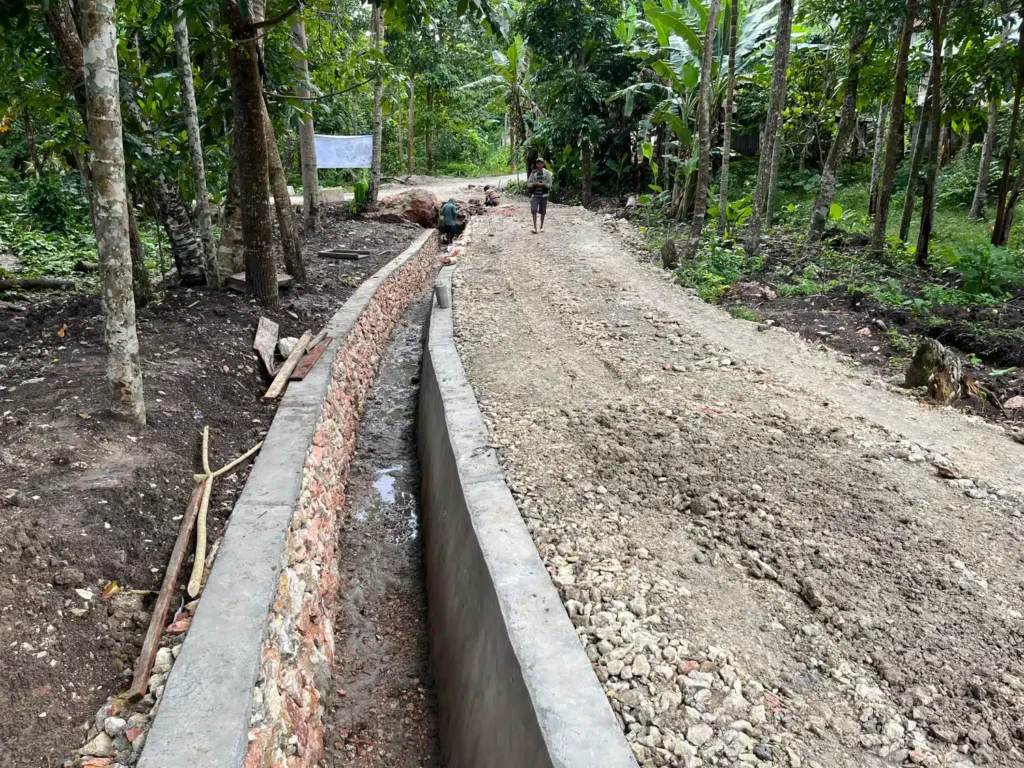
We had underestimated how much work this would involve. Once excavation and rain began interacting, drainage became an immediate priority.
The completed road subsequently carried large trucks weighing around 30 tonnes, including in wet conditions. Seeing these vehicles reach the delivery area was an important practical milestone after the work invested in the road and its drainage.
A School Taking Shape in Front of Its Children
The children also had opportunities to see what was happening and take part in small, age-appropriate tasks.
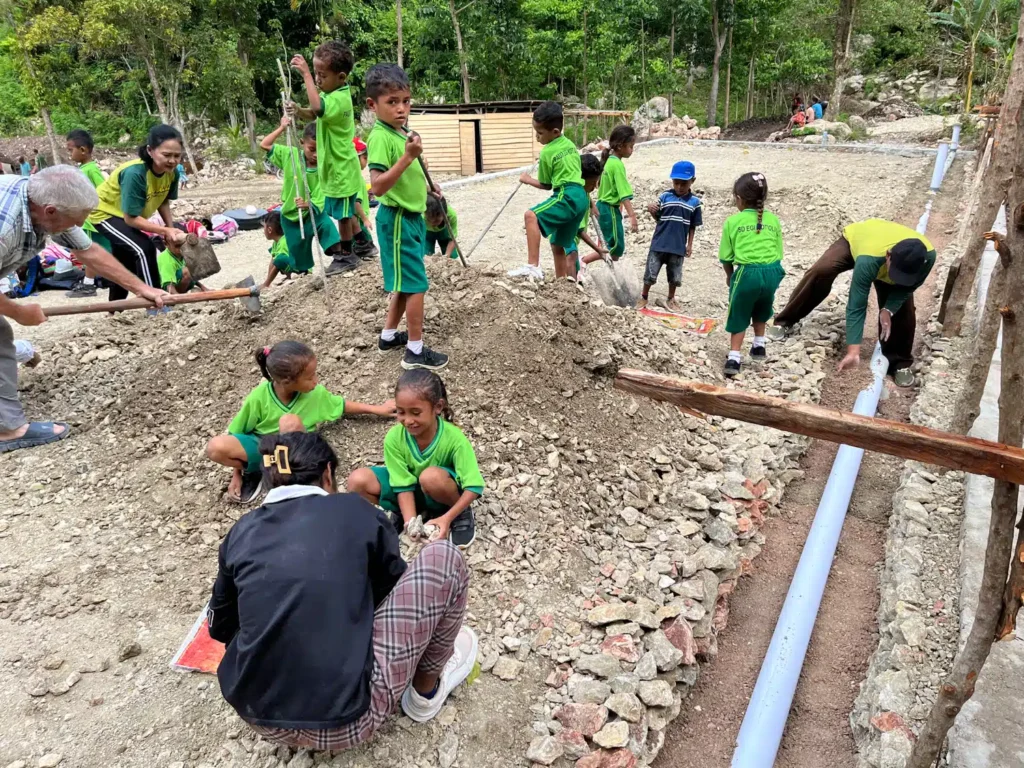
Their involvement was about participating and discovering, without taking on heavy construction work. The new school became something they could watch developing and contribute to in small ways.
Alongside the excavators, deliveries and construction plans, these moments connected the work to the children who will eventually use the buildings.
The Work That Changed the Schedule
Together, the permit process and the additional drainage work affected the programme considerably. The start of construction slipped by approximately a month, and the overall building schedule was pushed back by around two months.
That delay was frustrating, but it also reflected work that could not sensibly be left until later. Proceeding with the buildings while access remained vulnerable and water routes unresolved would have carried those problems into the next stages.
The drainage channels, crossings and prepared road represent a substantial investment. Much of it will be less noticeable once the classrooms and accommodation are complete. Yet these are the works that make deliveries possible, protect access and help manage the heavy rain the site must accommodate.
The experience also changed our understanding of the land. What initially looked like a relatively straightforward building site contained deep soil deposits, difficult handling conditions and water movements that only became fully apparent as work progressed.
Preparing Oekolo meant learning these conditions in detail and adapting to them. The buildings will be the visible result of the expansion. Their construction became possible through the earth moved, the road established and the space made for water to flow.