


When I first stayed at the school site, I slept in a tent. There was no electricity connection, no water supply, and an internet signal that sometimes struggled to carry a simple WhatsApp message.
Today, I can work from a solar-powered office with a fast connection and control over the persistent humidity. Getting here took several stages of improvements, each addressing a difficulty that had shaped everyday life.
For a long time, important work could mean a five- to six-hour journey to the city. Even after the school received an electricity connection, outages lasting more than a day and unreliable internet made it difficult to plan with confidence.
The latest improvements have changed that. Solar panels, a battery power station, Starlink and a drier, better-sealed office now give us something we had been working towards for years: the freedom to stay at the school and get things done.
A Connection Is Only the Beginning
When we first started here, there was no electricity connection or water supply, and the internet was barely usable. Even sending a simple WhatsApp message could be difficult. I initially slept in a tent while we gradually established the infrastructure.
Conditions improved step by step. Yet receiving an electricity connection did not mean receiving reliable power.
Outages remain frequent and can last more than 24 hours. Information about when supply will return is often difficult to obtain. Internet access brought similar uncertainty: sometimes a connection was available, but at other times it was almost unusable for two days.
For running the project, this affected much more than convenience. It was difficult to plan around a call, a deadline or work requiring a stable connection when neither power nor internet could be counted on.
Keeping the Essentials Running
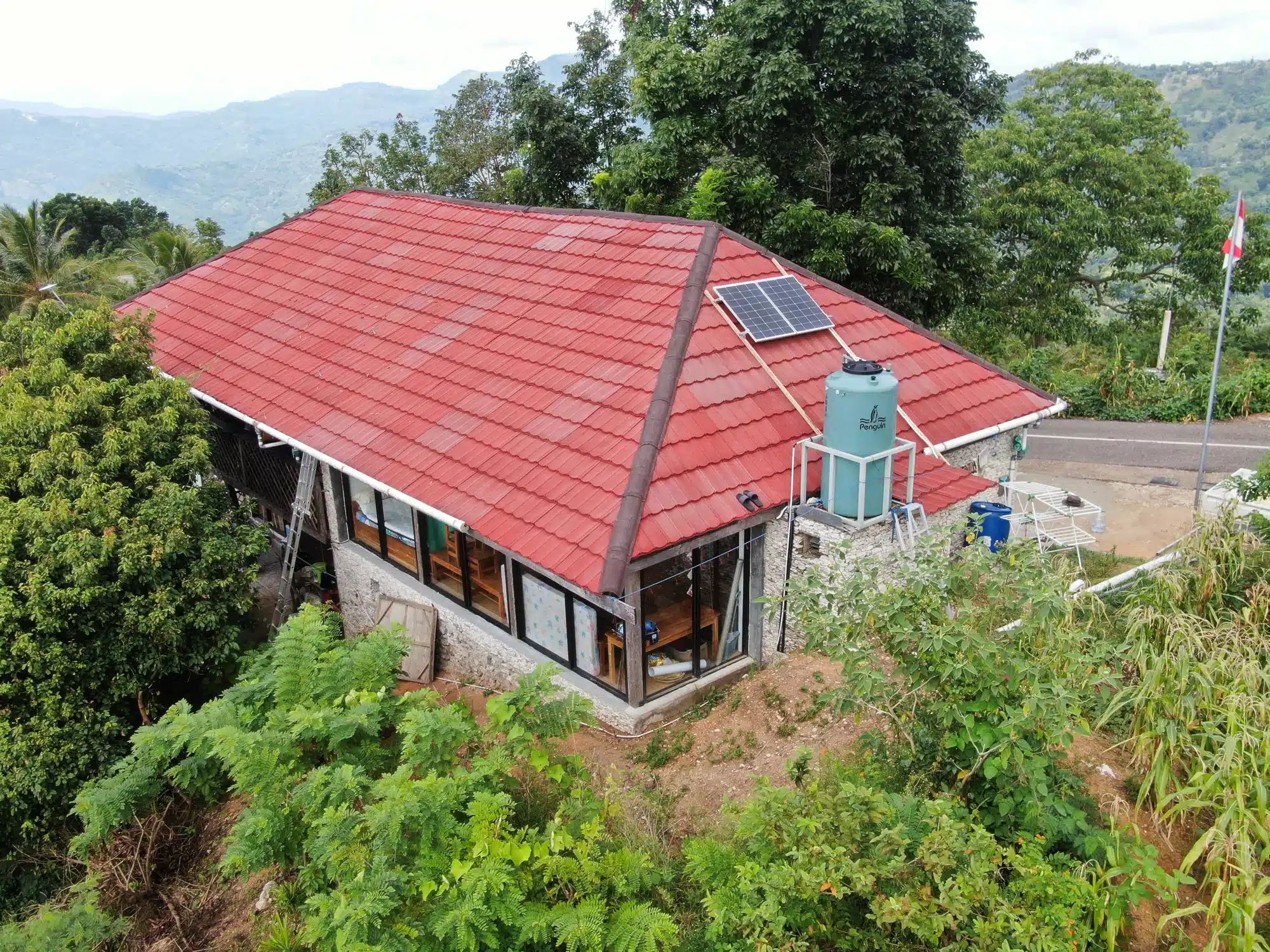
Our solar installation and battery power station now supply the office’s essential equipment: laptops, phone charging, lighting and Starlink.
This is a focused system for the office rather than a solar supply for the entire school. By concentrating on the equipment needed to keep working, we have gained a considerable degree of independence with a relatively modest installation.
For these essential uses, the battery allows us to continue working for at least 24 hours without sunshine. Under the weather conditions we usually experience, the panels replenish enough energy that we rarely need grid electricity for them.
Starlink has made an equally noticeable difference. We now have a fast, stable connection where previously even basic communication could be uncertain. Because it is connected to the power station, a grid outage no longer immediately takes our internet access with it.
The two improvements reinforce each other. Reliable internet is much more useful when the equipment providing it can keep running.
The Unexpected Difficulty of a Cooler Climate
The mountain location has an obvious advantage: it is cooler than the lowlands. What we underestimated was how strongly humidity would affect daily life indoors.
During our measurements, even sunny conditions in the dry season produced readings no lower than about 70 per cent relative humidity. Readings above 80 per cent were common, and indoors we frequently measured 85 to 90 per cent. Fog is also a familiar part of the setting.
These figures become tangible very quickly. Clothes and other fabrics develop a musty smell. Mattresses and backpacks feel damp. Spots of mould appear on walls.
The cooler temperatures do not necessarily make this comfortable. At around 20°C, a damp jumper can feel surprisingly cold. The room may not be hot, yet it still feels difficult to get dry.
For the office, managing moisture therefore became an important part of making the space usable.
Drying the Air Means Closing the Gaps
We had already found that a dehumidifier could remove moisture effectively. However, it also added heat to the room, which could become uncomfortable in warmer periods.
Air conditioning gave us another way to remove moisture while controlling the temperature. During initial use, the office humidity display sometimes dropped from around 80 to 45 per cent within five to ten minutes. That was an encouraging immediate observation, although a reading at one point in the room does not mean that every wall, fabric and object has dried equally quickly.
The installation also brought attention to the building itself.
Gaps around doors allowed outside air to pass through, particularly in windy conditions. Drying the room while humid air continually entered through those gaps would have meant repeatedly treating incoming moisture.
Finding suitable door details and seals locally proved difficult. We eventually ordered seals from Java and worked on closing the unwanted gaps.
The air conditioner and the sealing work belong together: one removes moisture from the office air, while the other helps limit its uncontrolled replacement by humid outside air.
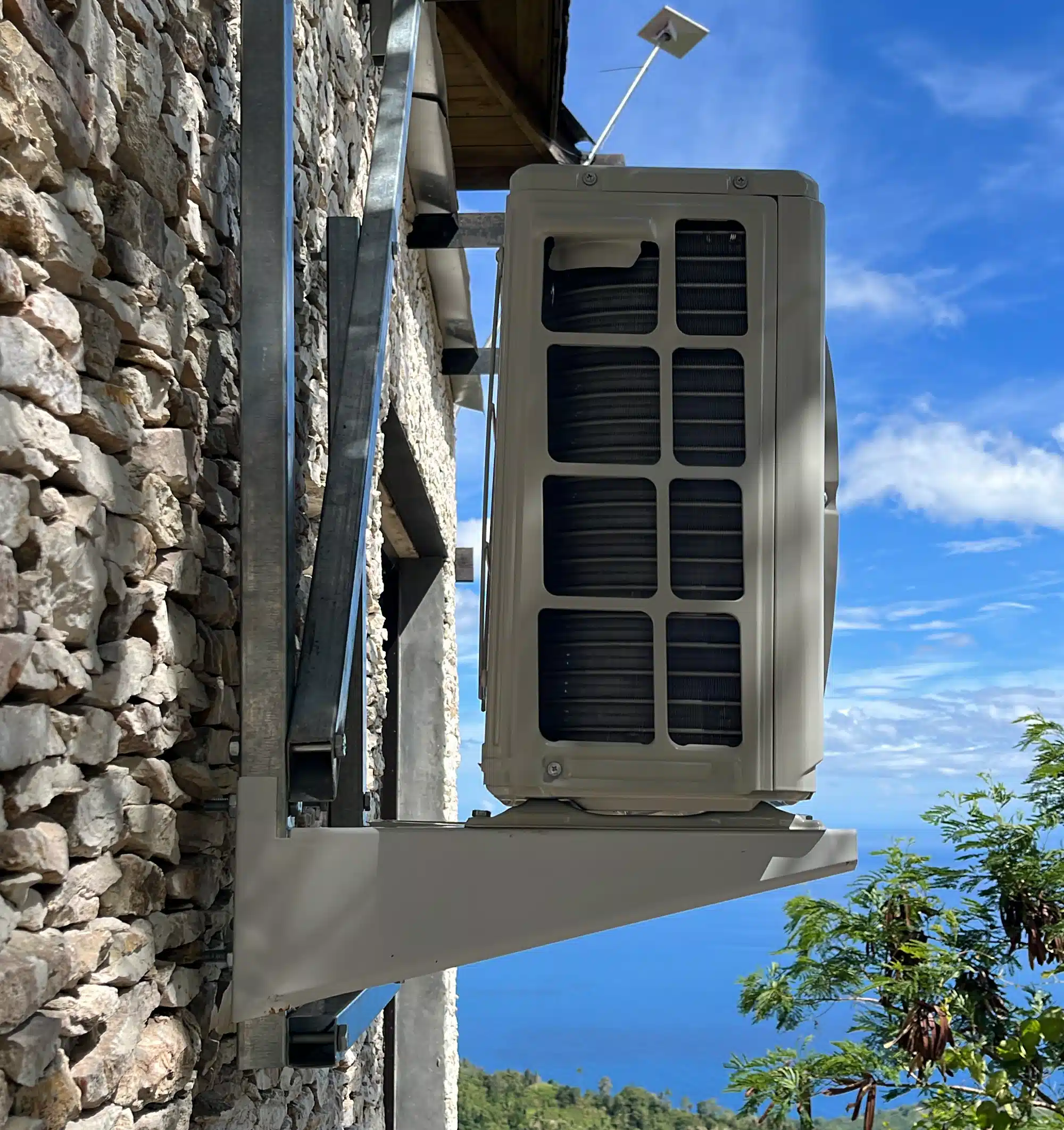
On sunny days, the solar panels can even supply enough power to run the air conditioner. That exceeded our expectations for a system originally intended primarily for essential office equipment. It does not mean the battery can support air conditioning indefinitely, but it allows us to use available solar energy for a more comfortable workspace.
An Oasis for Work
The biggest change is the freedom to plan a working day without first wondering whether the basic infrastructure will cooperate.
A power cut no longer automatically interrupts work. An important online task no longer means considering a journey to the city. I can stay where the project is happening and spend more time on the work itself.
We have not made the entire school independent of the grid. But for the office and its essential equipment, we have reached a level of independence that makes daily life considerably easier.
From the tent where I first slept to the workspace we have now, the change has been remarkable. In a place where sending a message was once a challenge, we have gradually created our own small oasis for work.