In many remote parts of Indonesia, school excursions are almost unheard of—especially for young children. For many families in the area, limited household budgets and few transport options make even short trips beyond the village difficult to organise. As a result, many children grow up without ever visiting the natural beauty that surrounds their own communities. At the Education Center Kot’olin, we believe that needs to change.
This year, our kindergarten children, embarked on three local journeys: to the sea, to a mountain, and to a waterfall. Each destination was just a few kilometers from home, yet for most of these children, it was their very first time visiting such places. For families with very limited means, these trips are not just about travel—they are moments of discovery, connection, and joy.
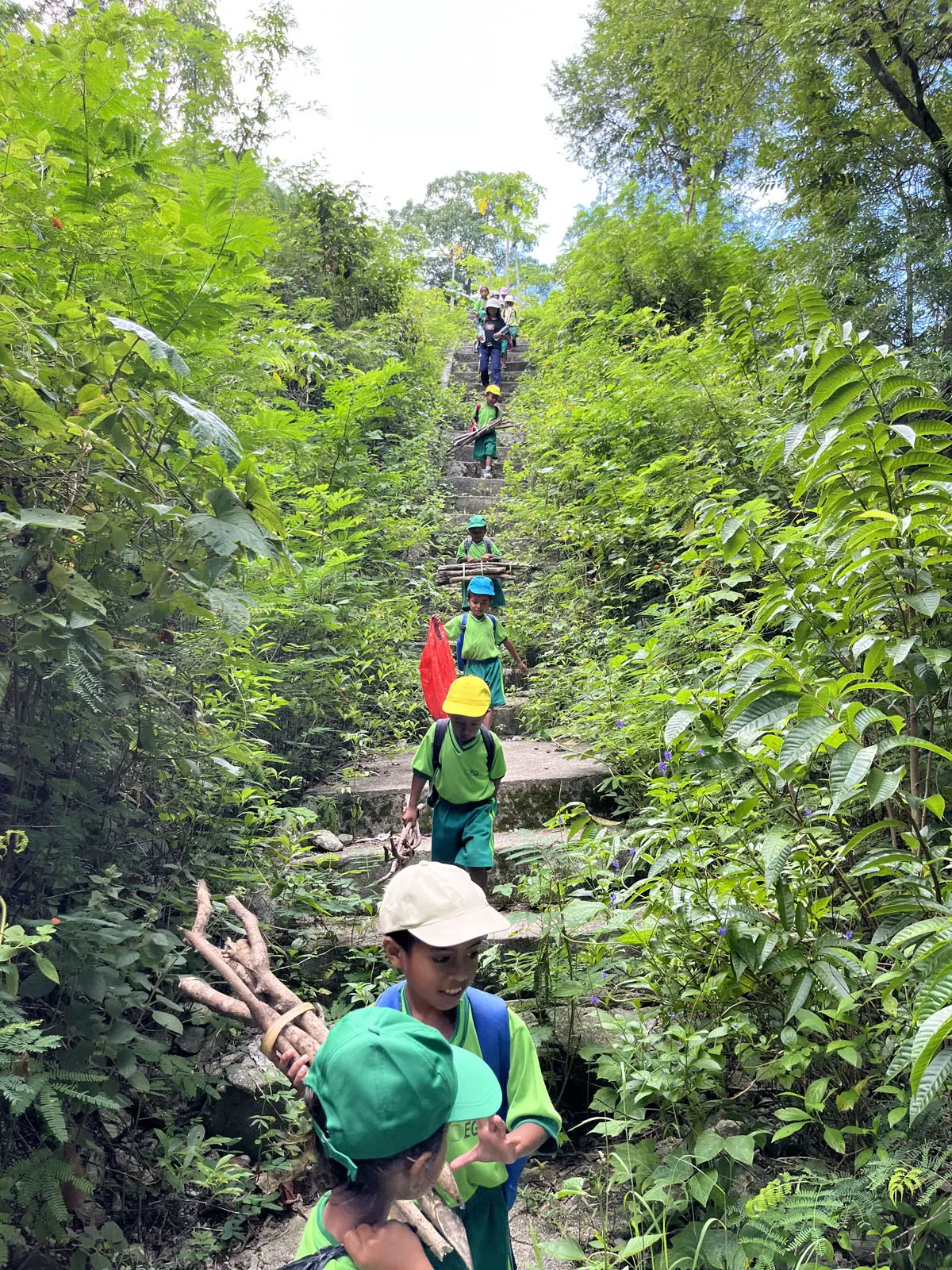
We made a conscious decision to involve the children in planning each trip: What do we need to bring? Who will carry what? What will we eat? Water, spare clothes, firewood, a small grill, and a sense of adventure were all packed together. This participatory approach matters deeply. In a system where education is often authoritarian, giving children a voice fosters creativity, critical thinking, and confidence. It teaches responsibility and collaboration—skills they rarely get to practice in conventional classroom settings.
To the Sea: A Day of Saltwater, Stones, and Smiles
Our first excursion took us to a nearby beach, just 10 kilometers away. For most of our kindergarteners, it was their very first time seeing the ocean. They squealed with excitement as we loaded them, safely and slowly, onto the back of a pickup truck, a normal mode of transport in our area.
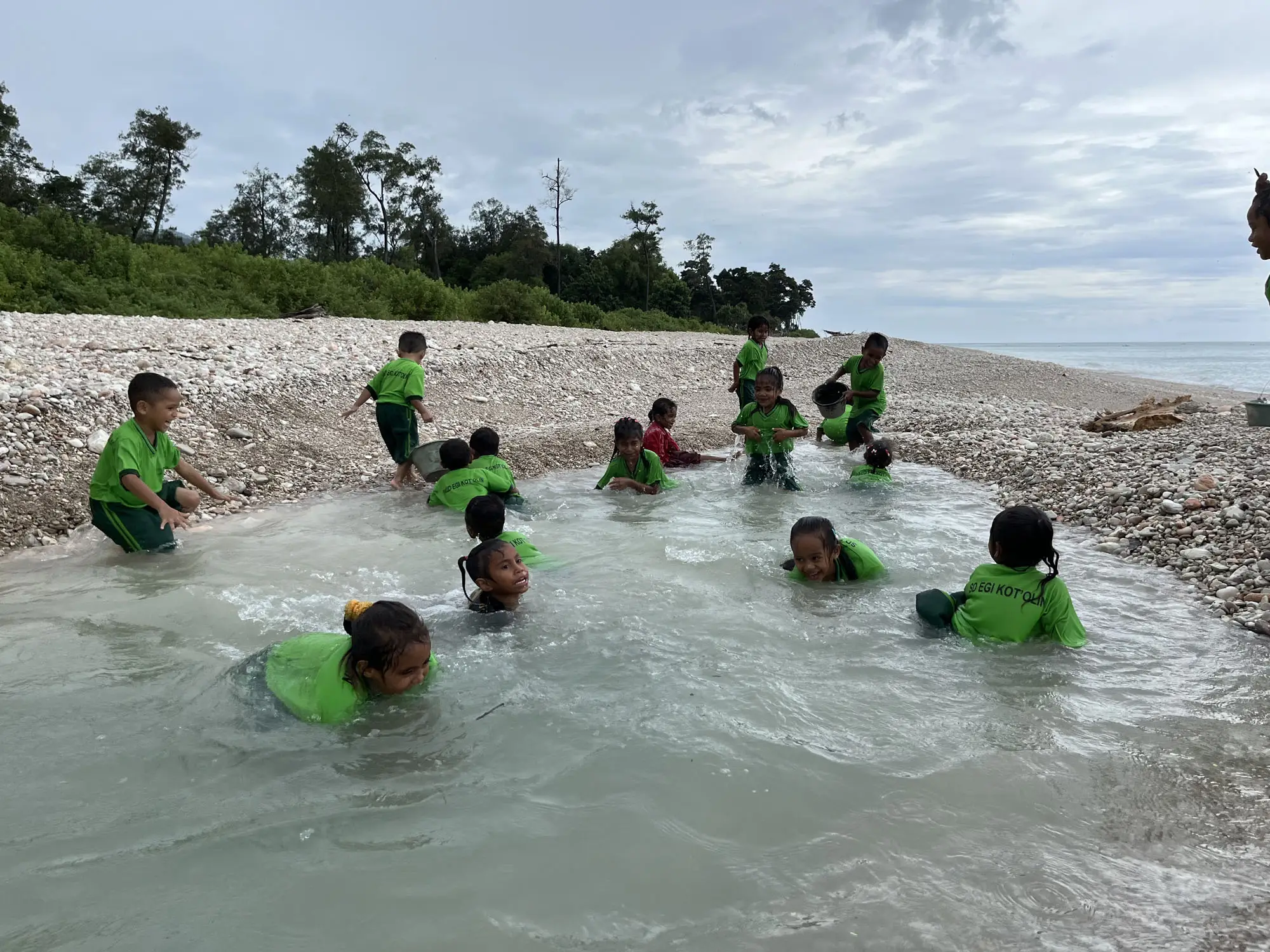
The beach was magical. White pebbles and dramatic cliffs formed the backdrop to a day full of wonder. The children played near the water’s edge, collecting beautiful stones and chasing tiny waves with laughter. Because there are no public swimming facilities in Kot’olin, this chance to play in a shallow, freshwater delta—where a small stream flows into the sea—was something extraordinary. Safe, gently flowing, and just deep enough to splash and float, it became a natural playground.
We organized games in small groups and used the time to blend play with learning—observing shells, feeling textures, talking about the ocean. With careful supervision from teachers and adults who could swim, the children experienced water in a way they had never before.
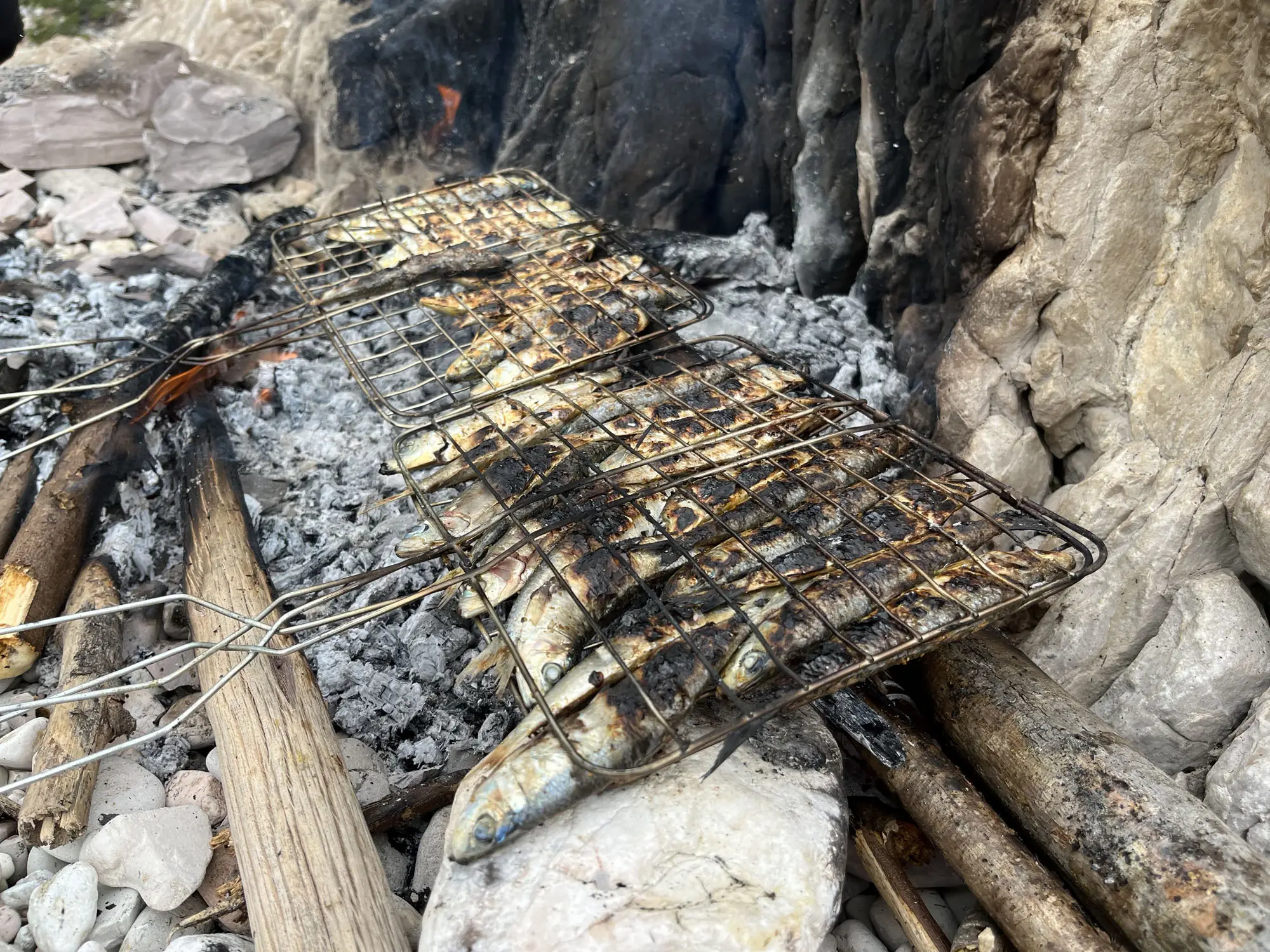
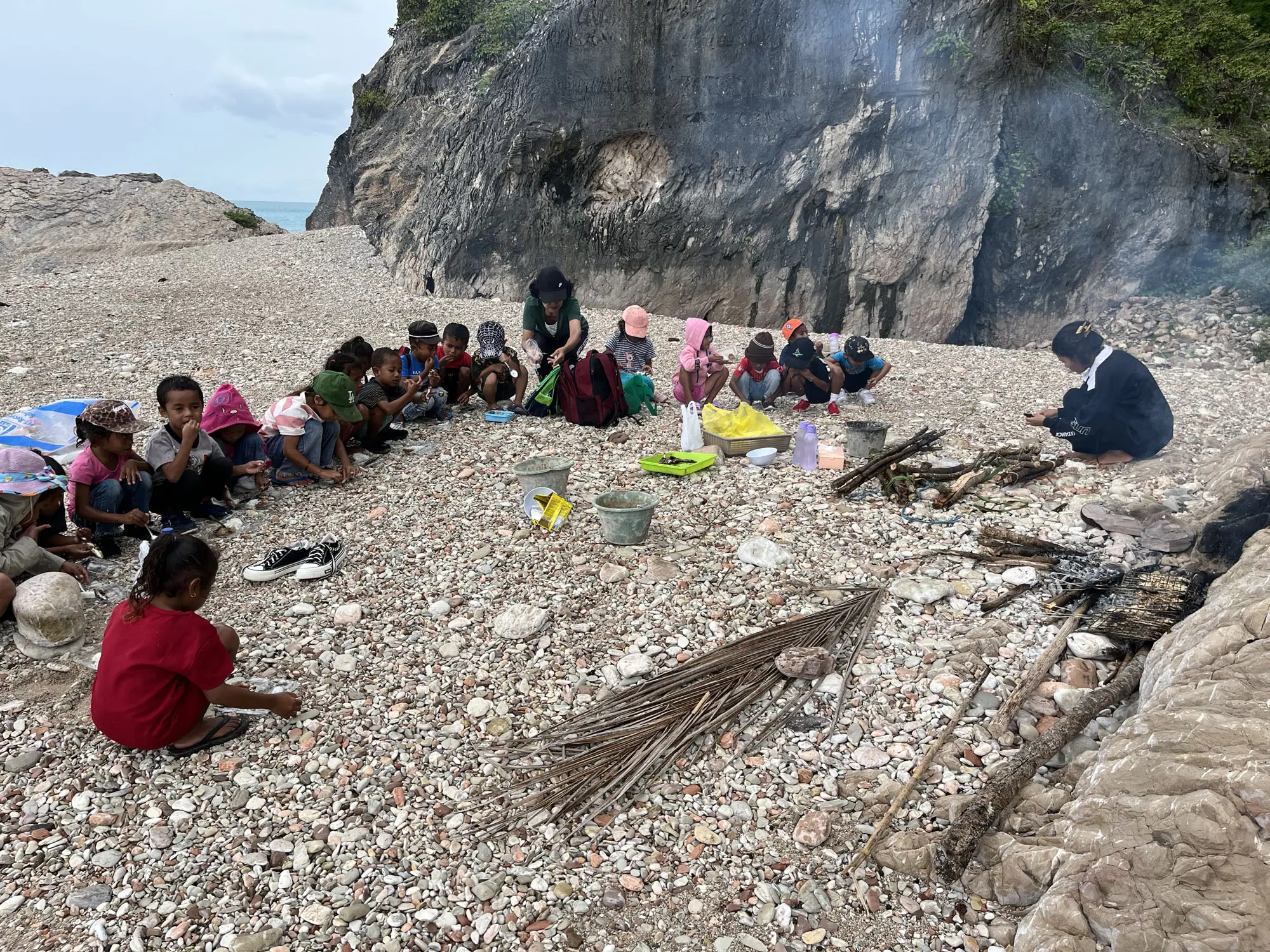
One especially joyful moment came when local fishermen passed by. For the equivalent of just 50 cents, we bought 30 small fish and grilled them right there on the beach, using firewood we had brought from home. The children watched eagerly as the fish cooked, then shared a meal together, sitting on the pebbles with sandy toes and sun-warmed smiles.
By the end of the day, they were exhausted—in the best way. Muddy, salty, happy, and full of stories, the children returned home with something far greater than souvenirs: they had discovered that beauty and adventure exist right where they are.
Into the Hills: Forest Trails and Hide-and-Seek Near the Clouds
Our second adventure took us uphill to Binenok, a neighbouring village above Kot’olin. After a short drive in our pickup, we continued on foot towards a summit 1,000 metres above sea level. From the road, the walk was about a kilometre, with roughly 150 metres of climbing. For our young explorers, there was plenty to discover along the way.
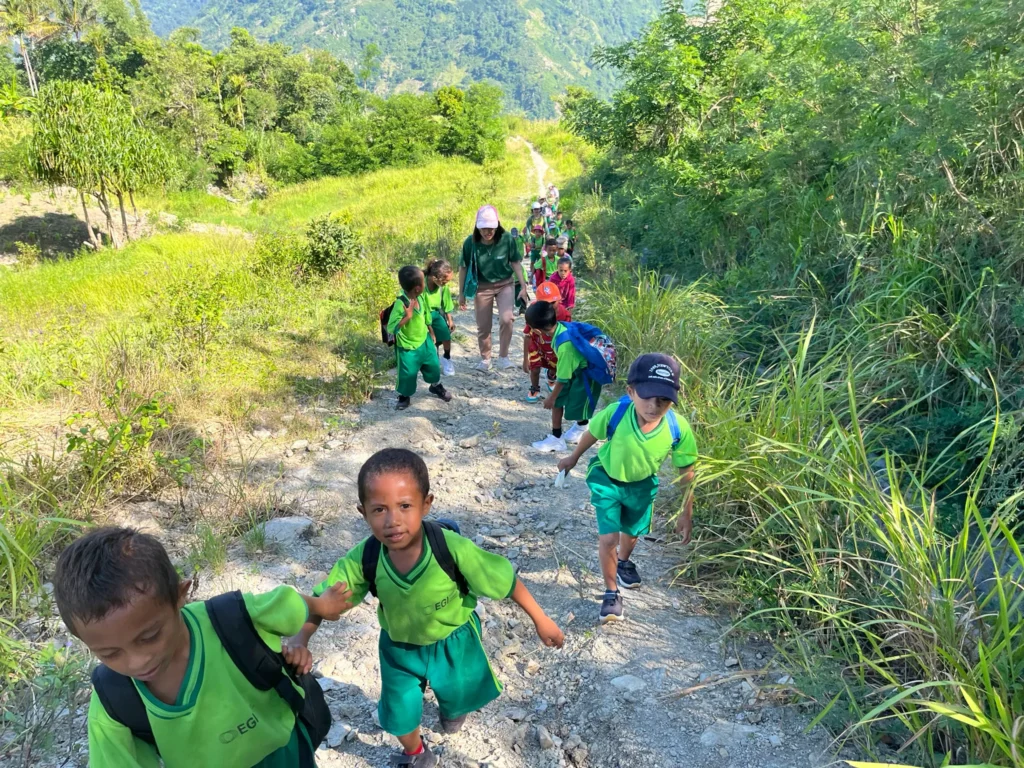
The trail led through the forest, past flowers in different colours and across a small stream on a narrow wooden beam. Walking together gave the children time to notice the little things around them. The journey itself was already part of the adventure.
As we reached the top, the forest opened into a green meadow with sweeping views in every direction. The children set off running, excited by the open space. Outings like this are rare for them, and the hilltop offered a whole new place to explore.
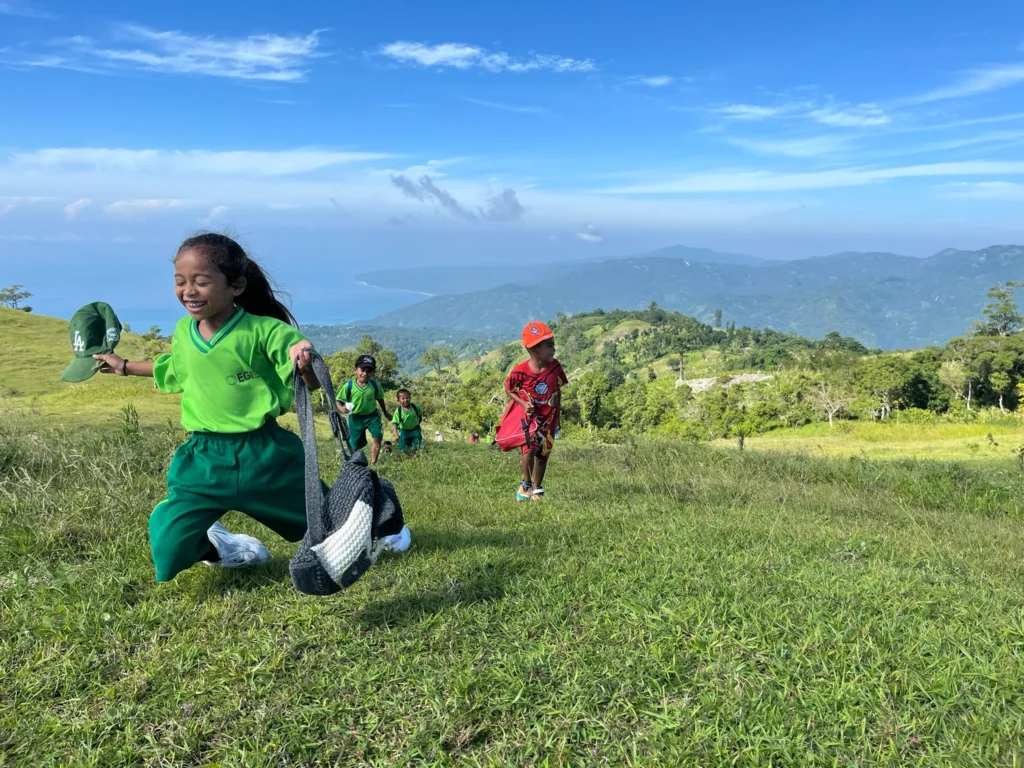
Then the children announced that they wanted to play hide-and-seek. Looking across the open grassland, we wondered where anyone was going to hide! But they were determined. Patches of tall grass soon became hiding places, and the game went ahead with plenty of laughter.
We played relay games, held running races and organised a nature scavenger hunt, encouraging the children to look closely at their surroundings. There was room for movement, teamwork and their own ideas. Their enthusiasm helped shape the day.
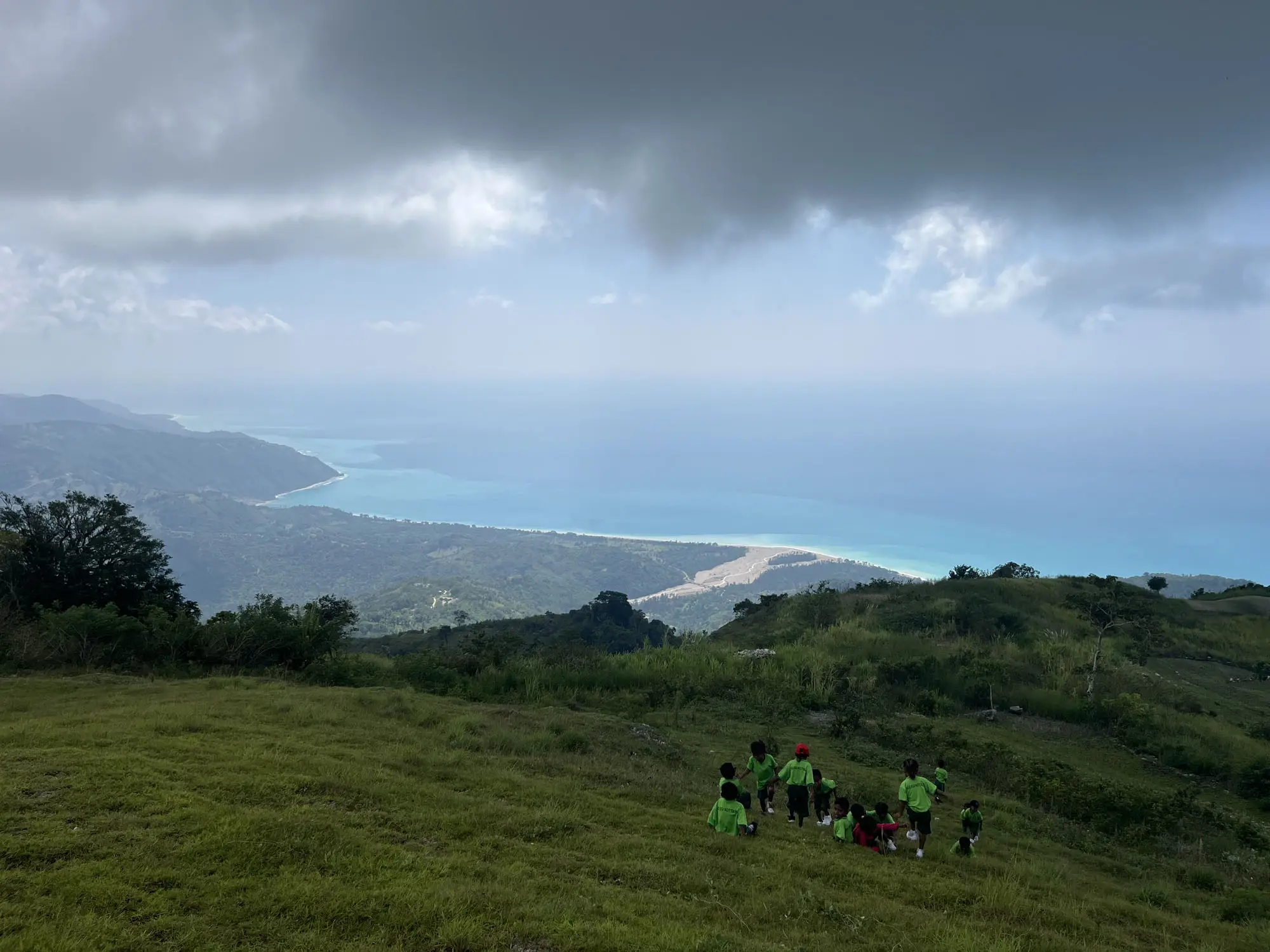
A further summit to the south offered a spectacular view towards the sea. With the coastline stretching out below and clouds hanging close above us, there was as much to discover by looking into the distance as there was in the grass at our feet.
To the Waterfall: Helping Hands and Corn by the Fire
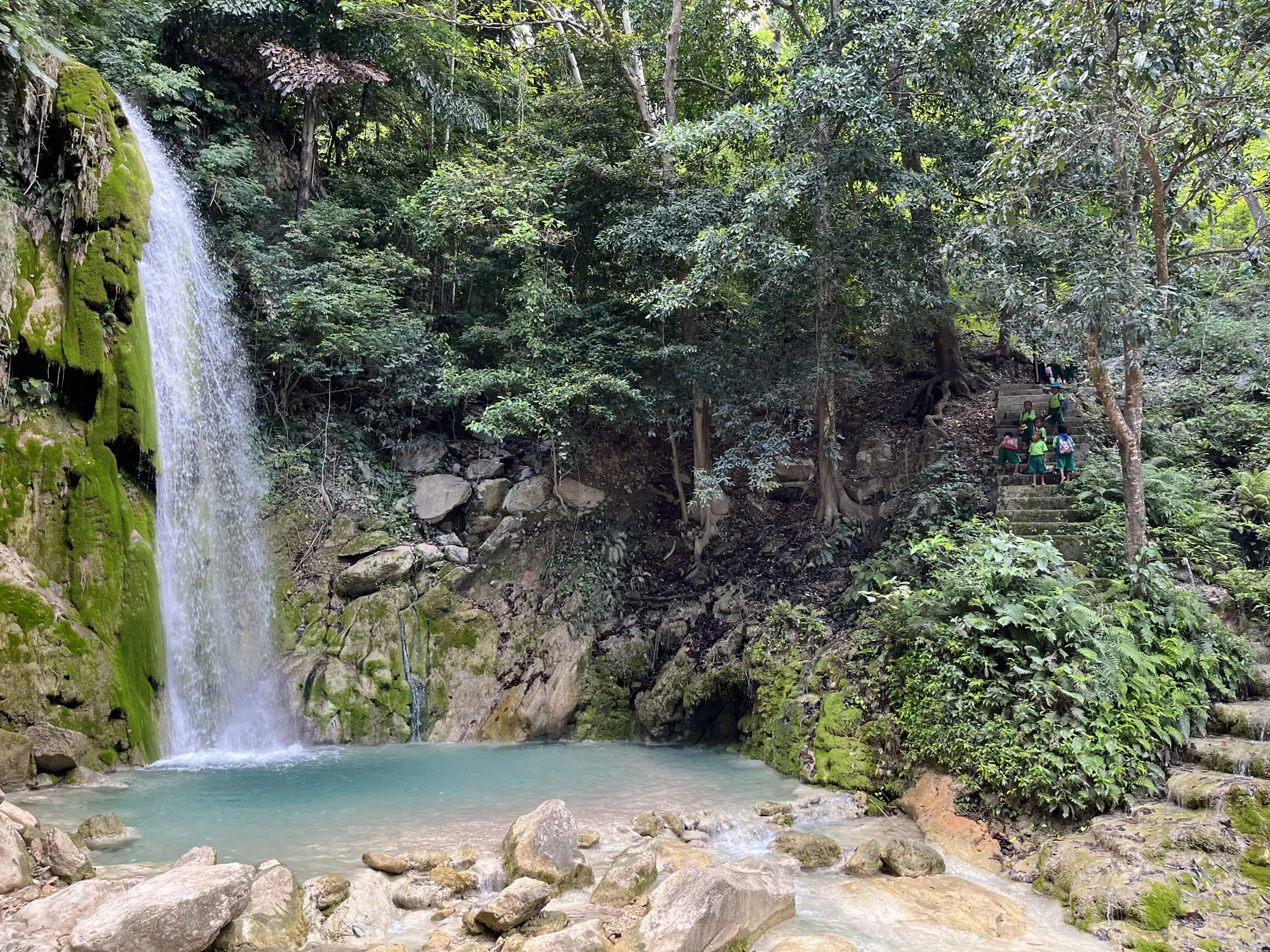
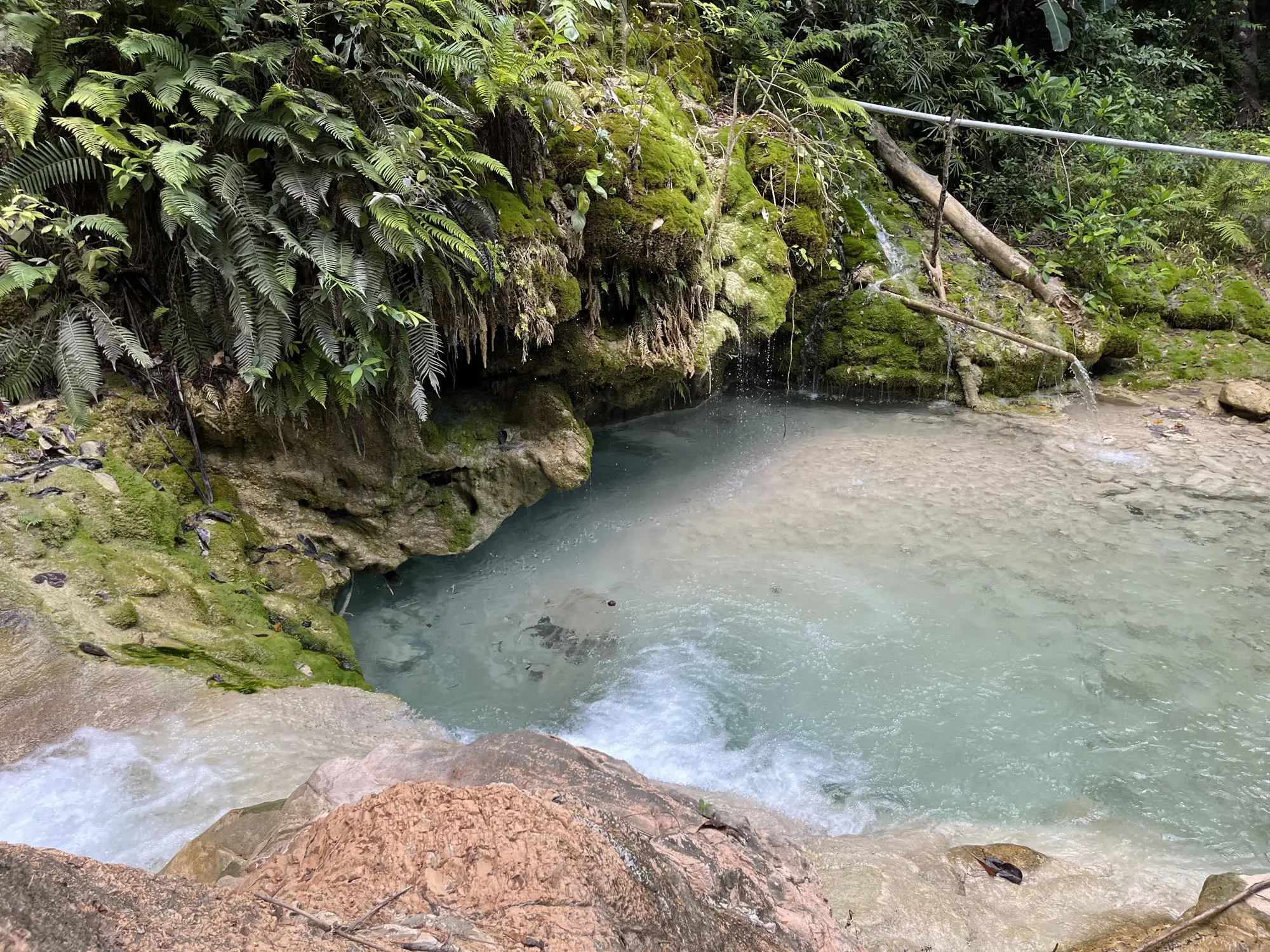
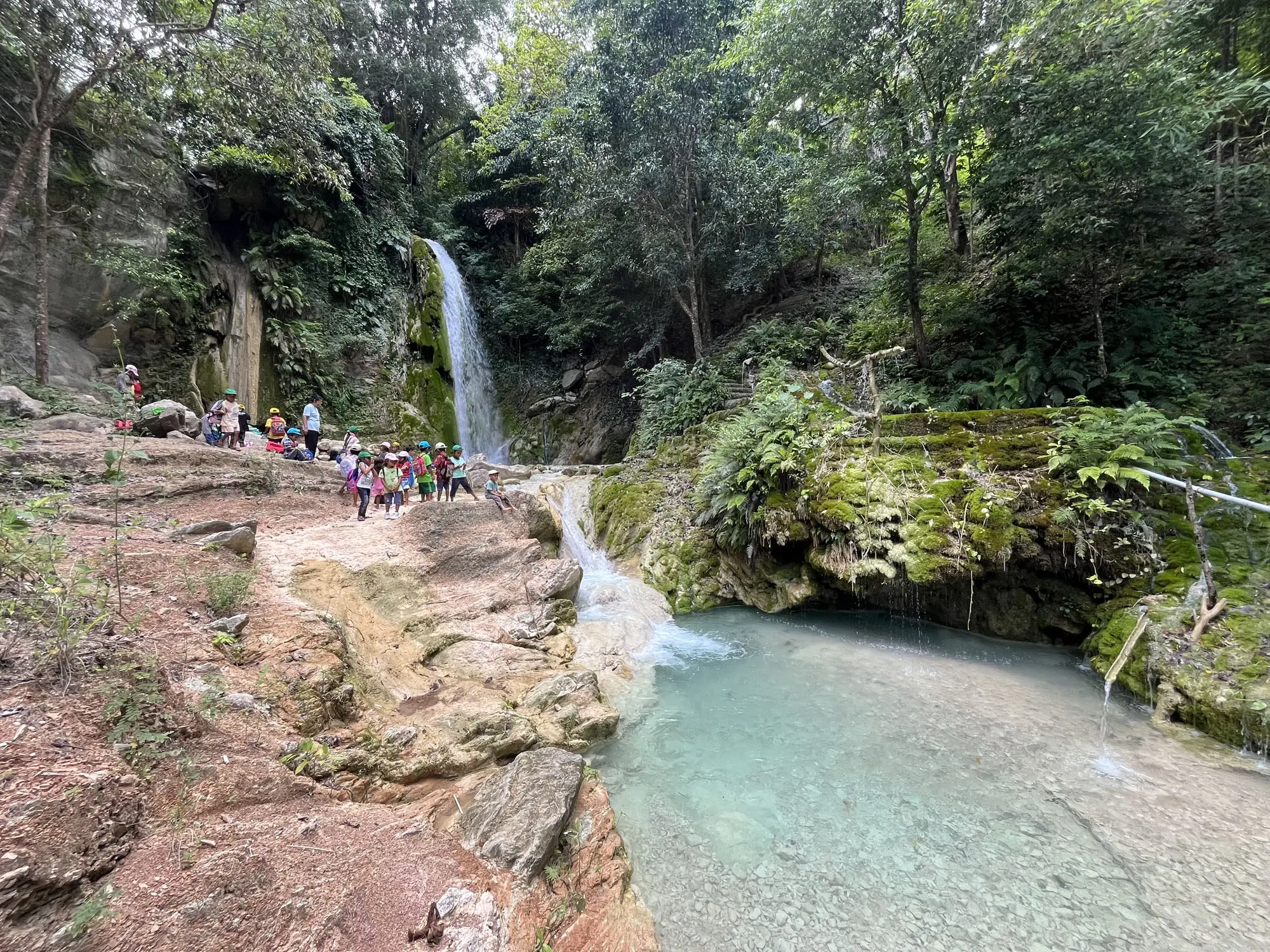
Our third excursion took us to a waterfall in neighbouring O’Obibi, west of the school. In this lower part of the village, a stream winds through lush tropical greenery before tumbling over a tall waterfall and a smaller cascade below. Water flows across rocks and moss, creating a beautiful place to stop and explore.
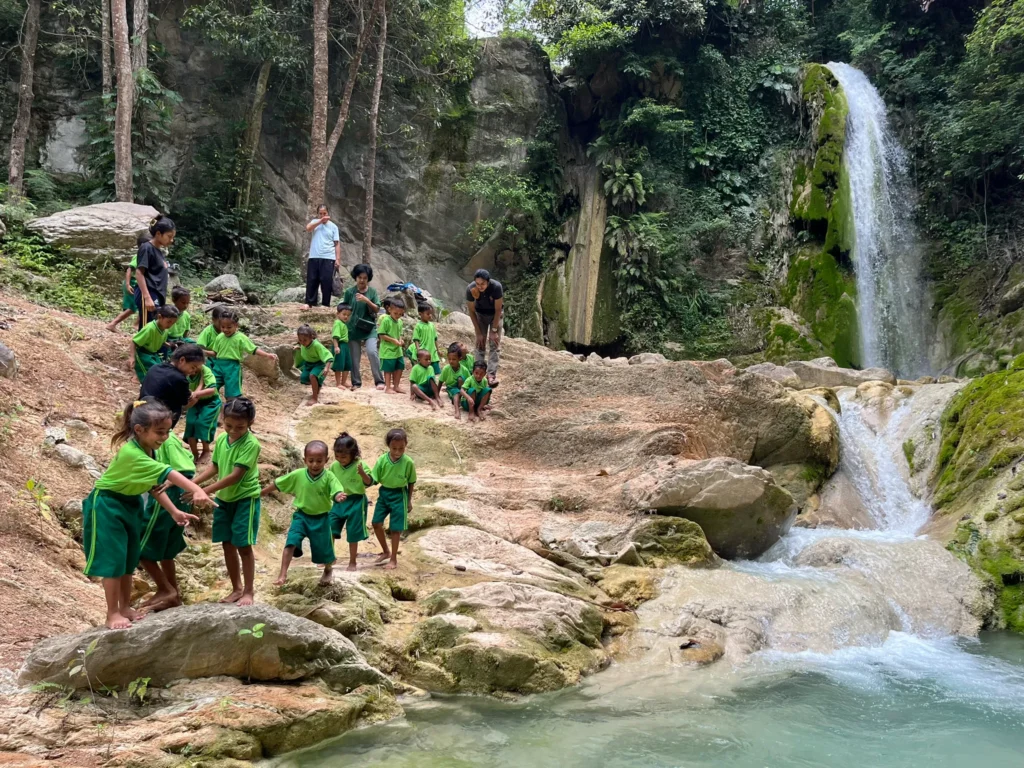
The waterfall is only about fifteen minutes from school. For some children, it is barely ten minutes from home. Yet most had never visited it, and even some local adults had never been there. A place so close by became a completely new discovery.
One of the most memorable moments happened as we crossed the stream. The children helped one another find their way, reaching out a hand to a friend and making sure they could get across together. It was lovely to watch this care for one another become a natural part of the outing.
The children had brought firewood from home, ready for our shared meal. We made a fire, roasted local corn and ate together beside the waterfall. With the sound of falling water around us, a simple meal became a special part of the day.
These are the experiences we hope the children will remember: discovering a beautiful place near home, helping a friend and sharing food they had helped prepare. A short trip offered so many opportunities for curiosity, cooperation and joy.